To mark the International Women’s Day (IWD), on 9 March 2026, CGIAR women staff in Tanzania, led by the International Institute of Tropical Agriculture (IITA)…
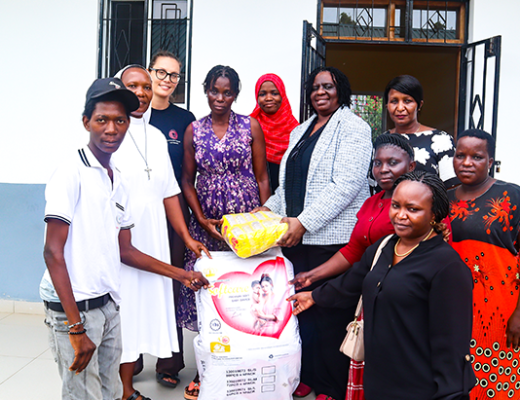

To mark the International Women’s Day (IWD), on 9 March 2026, CGIAR women staff in Tanzania, led by the International Institute of Tropical Agriculture (IITA)…
On 1 December 2025, IITA-CGIAR hosted the Technologies for African Agricultural Transformation (TAAT) Soybean Green Field Day at its campus in Namulonge, Kampala, Uganda, bringing together over 100 stakeholders to showcase TAAT soybean innovative production technologies. The event aimed…

Banana breeding is a complex, expensive and time-consuming process because bananas have reduced fertility and a long cycle, taking decades to develop and release new varieties. However, recent research by IITA-CGIAR improves drastically the efficiency of banana breeding, paving…
NemAfrica at 10: How science is helping farmers beat potato and root pests NemAfrica, founded to unite experts in nematology research in Africa, is a joint nematology laboratory between IITA–CGIAR and the International Centre of Insect Physiology and Ecology (ICIPE). NemAfrica works to tackle nematode…
African smallholder farmers, the backbone of food and nutrition security, are on the frontline of climate change, facing its reality. Battered by a ‘perfect storm’ of climate shocks—simultaneous extreme heat, droughts, floods, and rising temperature variability—smallholder farmers, particularly in…
IITA–CGIAR is deploying advanced data and AI-driven modelling to boost soil nutrient management and soil health and improve farmer productivity in West Africa, a region experiencing recurrent nutrient depletion due to unsustainable farming practices and injudicious fertilizer use.…
Banana is a staple crop in Uganda, providing millions of people with food, income, and employment. Despite its production potential exceeding 70 tons per hectare per year, the sector faces significant challenges, including pests and diseases, poor soil…
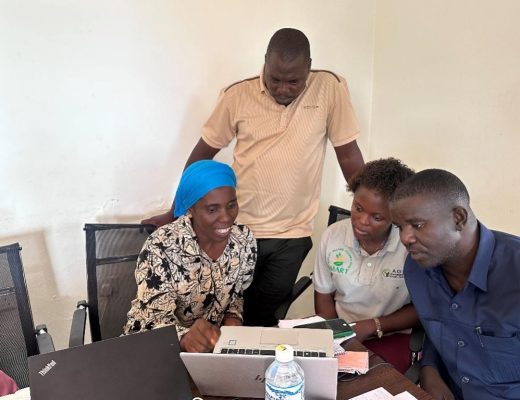
Persistent gender inequalities within agrifood systems limit equitable access to resources, decision-making power, and economic opportunities. Recognizing the need for systemic change, the Gender Equality and Inclusion Accelerator conducted a pilot training course on Gender Transformative Approaches (GTAs) for…