In an era where technological breakthroughs and ecological crises are rapidly reshaping the African continent, the demand for rigorous, evidence-based science journalism has never been more urgent. In recognition of her track record in science communication and solutions-driven reporting,…

Western Africa
A promising technology. A pressing need. What connects the two? That question shaped discussions at the 2026 IITA Eastern Africa Hub Retreat, held from 16 to 18 September at Ridge Cabin Resort in Limuru, Kenya. Colleagues from across East…
Unlocking Africa’s crop diversity through adaptive breeding: Insights from Prof Carlos Iglesias
As part of the working visit of Dr Makram Geha, Director of the CGIAR Breeding for Tomorrow (B4T) Science Program, to IITA–CGIAR, Professor Carlos Iglesias of North Carolina State University (NCSU) delivered an engaging seminar that took participants on…
As part of efforts to support the availability of quality planting material for farmers ahead of the 2027 production season, IITA donated breeder seeds of two improved yam varieties to seed producers and national research institutions in Ghana recently. …
When Adeoluwa Modupe left an IITA yam farmers’ training earlier this year, she did more than take home new knowledge. She took it to the farm. Today, about two acres of her 10-acre farm in Alaarin, Elekuru Farm Settlement,…
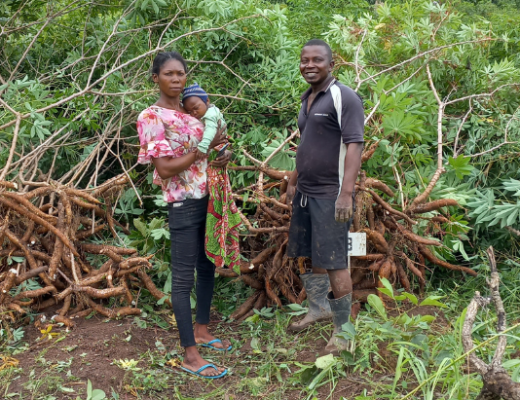
What makes a good cassava variety? For farmers, it may be high yield,early maturing, excellent plant architecture ,variety conversion ratios, product suitability and quality food properties after processing.For processors, it goes further—, how well does the cassava perform when…
Healthy soils, stronger food systems: How science is powering Sierra Leone’s ‘Feed Salone’ agenda
For decades, farmers, researchers, and policymakers in Sierra Leone have worked with limited and outdated soil information, making it difficult to determine where crops perform best, what nutrients are needed, and how fertilizer/other input investments can deliver the…
When citizen science strengthens breeding: Award-winning research provides new evidence of tricot’s social impact
When farmers participate in crop breeding as citizen scientists, their knowledge and experience can shape which varieties are advanced and released. But participation can also strengthen farmers’ own knowledge, agency and leadership—capacities that can, in turn, make breeding…