
By Mercy Lung’aho, Food Security, Nutrition and Health Program Lead, IITA
Every year, we reaffirm our commitment to women and girls in science. We host panels, share statistics, and celebrate role models. These efforts matter, but in Africa today, they are no longer enough.
The 2026 International Day of Women and Girls in Science theme, “From vision to impact: Redefining STEM by closing the gender gap,” challenges us to move beyond awareness and intent. It asks whether our scientific systems are actually delivering better outcomes, and for whom. For policymakers across Africa, this is not an abstract concern. It goes to the heart of development effectiveness because the gender gap in STEM is not only a fairness issue, but it is also a scientific quality and development effectiveness issue.
I work at the intersection of agriculture, nutrition, and health, across diverse African contexts. In this space, one lesson is clear: who designs the science determines what the science delivers. If women are missing from the design stage, the consequences ripple outward. Consider emerging technologies, particularly artificial intelligence (AI) and data science. Across Africa, these tools are increasingly used to guide decisions on crop breeding, food systems, climate resilience, and diet priorities. Models now influence which traits are prioritized, which regions receive investment, and which risks are deemed acceptable. But models are not neutral; they reflect the assumptions of their creators. When women are absent from these processes, systems tend to optimize for what is easiest to measure—yield, disease resistance, or profitability. Nutrition, dietary diversity, caregiving realities, and long-term resilience are often sidelined as secondary. The result is technology that looks impressive on paper but fails to improve diets, reduce vulnerability, or protect the most at-risk populations.
Closing the gender gap in STEM changes that equation. Women scientists bring different questions to the table. They interrogate trade-offs others overlook. They ask who benefits, who bears the burden, and what happens beyond the laboratory or algorithm. This is not about biology or sentiment. It is about lived experience shaping scientific priorities. In my work, integrating AI and data science into nutrition and food security decision-making has shown me how powerful this shift can be. When women help shape datasets and models, we see different outputs. Diets matter as much as yields. Children and women appear in the analysis, not as afterthoughts, but as central outcomes. Policy options expand, not narrow. This is what moving from vision to impact looks like.
It also means rethinking how we build scientific teams. Mentorship and women’s leadership in STEM are not soft add-ons; they are core infrastructure for resilient science systems. Too often, women are brought into STEM spaces as contributors rather than architects. They collect data but do not define the questions. They support projects but do not lead them. They are mentored to fit into existing systems, not empowered to redesign them. Yet, inclusive STEM ecosystems are built deliberately. They require investment in women-led teams, clear pathways to leadership, and institutional cultures that value mentorship as much as publication counts. In my experience, this is a strategic tool. Building women-led scientific teams strengthens institutional relevance, improves accountability, and ensures that emerging technologies serve public good goals rather than narrow technical benchmarks.
For policymakers, the implications are clear. First, gender equity in STEM must be treated as a performance issue, not a symbolic one. Funding frameworks, national research agendas, and innovation strategies should ask not only how many women are involved, but where they sit in the decision chain.
Second, investments in emerging technologies should require gender-aware design. AI, modeling, and data platforms used for public decision-making must be built with diverse scientific leadership, or they will reproduce existing blind spots at scale. Third, mentorship and leadership development for women scientists should be resourced as core infrastructure. Just as we fund laboratories and data systems, we must fund the human systems that make science credible and impactful.
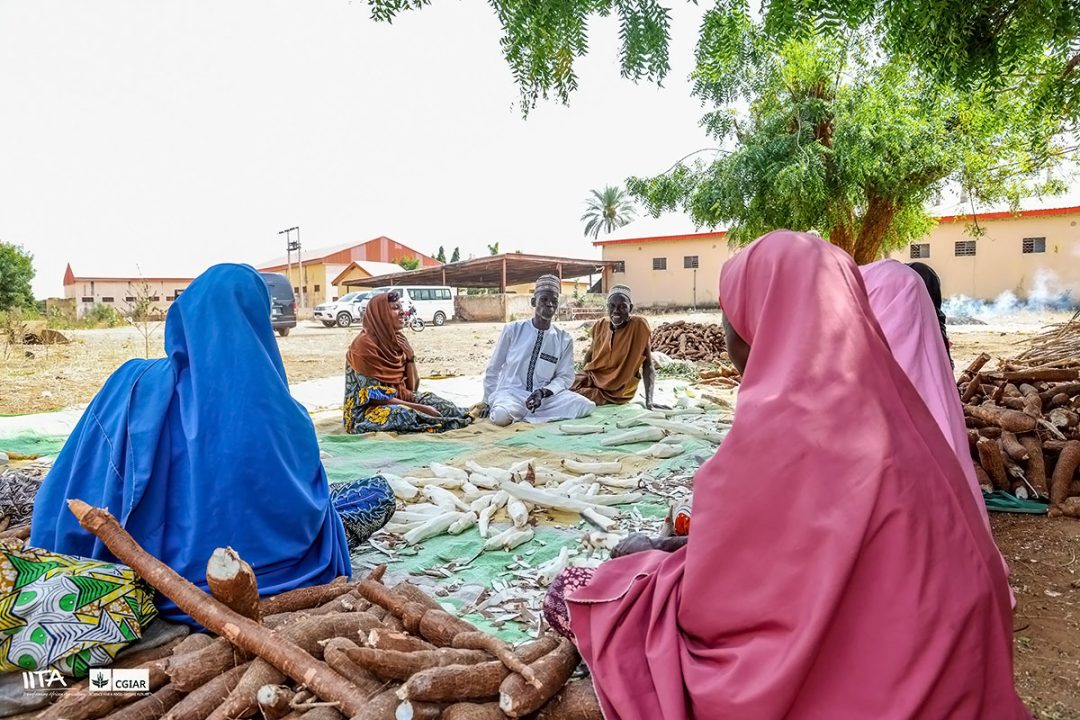
I am the product of rural women who valued education. Women who understood, long before policy frameworks did, that knowledge invested in a girl or woman is a form of currency and security. Their belief carried me into science. My responsibility now is to ensure that science carries that belief forward into systems that work for everyone.
Closing the gender gap in STEM is not about ticking boxes. It is about better science, better policy, and better outcomes for Africa’s agri-food systems, health systems, and future.
Vision is important. But impact is the measure that matters.


No Comments