
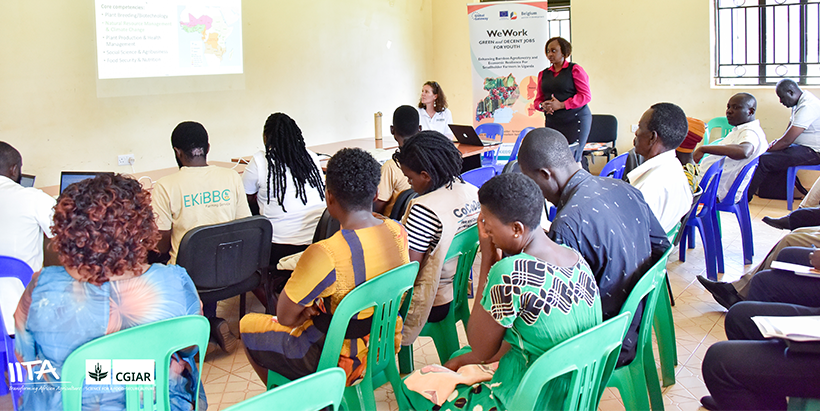
Dr Diana Kirungi during a presentation at IITA.
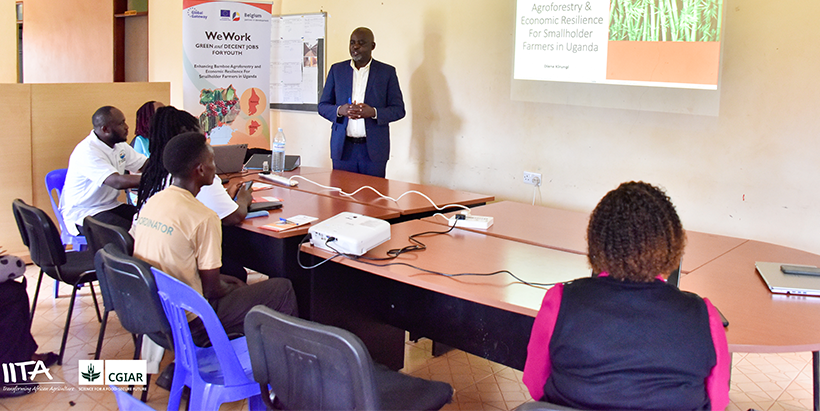
Mr. Nagaya Moses, Senior Assistant Chief Administrative Officer launching the project in Buikwe district.
IITA–CGIAR has launched a groundbreaking initiative to enhance bamboo agroforestry and economic resilience among smallholder farmers in Uganda. “Enhancing Bamboo Agroforestry & Economic Resilience for Smallholder Farmers in Uganda”, under the WeWork-green and decent jobs for youth project, was officially launched on 8 April 2026 in Mukono district and on 9 April 2026 in Buikwe district. Led by IITA-CGIAR in collaboration with partners such as EKiBBO Farming Services, the National Agricultural Research Institute (NARO), Enabel, and funded by the European Union and the Belgian government, this initiative aims to address pressing challenges faced by smallholder farmers in Mukono and Buikwe districts. These farmers, reliant on cash crops such as coffee, cocoa, and vanilla, struggle with climate variability, soil degradation, and limited income diversification, threatening their livelihoods.
The launch events were attended by key officials, including Stephen Muhumuza, Deputy Chief Administrative Officer of Mukono district, who officially launched the project in Mukono, and Nagaya Moses, Senior Assistant Chief Administrative Officer of Buikwe district, who launched it in Buikwe. Other participants included District Natural Resources Officers, District Production Officers, a team from EKiBBO Farming Services, the IITA team (Local Council 5, Youth Representatives, farmer representatives, team from Bamboo Uganda), representatives from MAAIF, and Agricultural officers, among others.
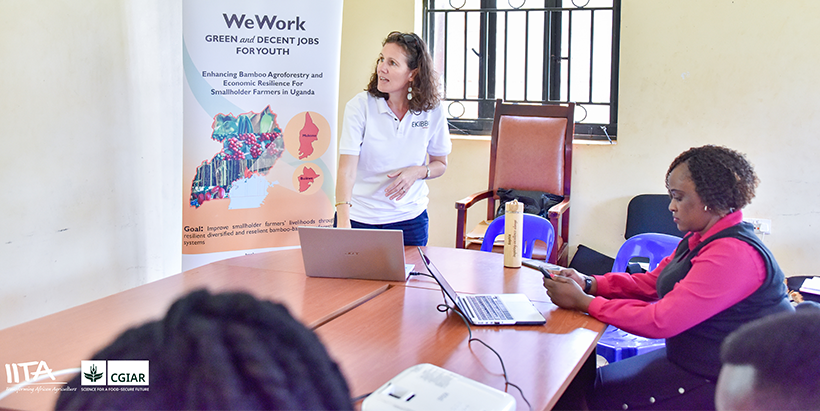
Sophie Arcedeckne-Butler, Managing Director of Ekibbo Farming Services presenting about Ekibbo.
Speaking at the launch, Stephen Muhumuza described the initiative as “a timely and strategic intervention addressing environmental degradation.” Sophie Arcedeckne-Butler, Managing Director of EKiBBO Farming Services, emphasized the initiative’s participatory approach, working closely with local leaders and farmers. The initiative will promote bamboo-based agroforestry, leveraging Ekibbo’s network of 1,500 registered farmers. Bamboo’s resilience, fast growth, and climate-smart benefits can enhance crop yields, increase household income, and support sustainable agriculture. Specifically, bamboo sequesters carbon, improves soil fertility, controls erosion, provides shade, and offers multiple income streams through poles, shoots, crafts, and biochar.
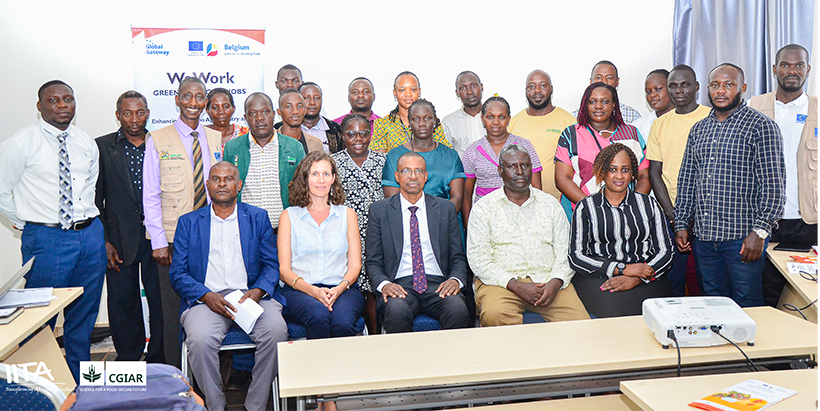
Participants of Mukono district.
In Buikwe, district officials welcomed the initiative, highlighting its potential to boost coffee and cocoa production. “Bamboo has strong market demand. Let’s empower our farmers to tap into this opportunity,” said Brenda Nansereko Bijimu, Bamboo Uganda.
Dr Diana Kirungi, IITA Research Associate noted that the initiative follows a research-to-action model, integrating bamboo with crops like coffee, cocoa, and vanilla to improve productivity. The initiative expects to improve crop yields by 30%, increase household income by 20%, and enhance climate resilience, aligning with Uganda’s national priorities (NDP IV, Vision 2040) and SDGs (1, 2, 5, 8, 13).
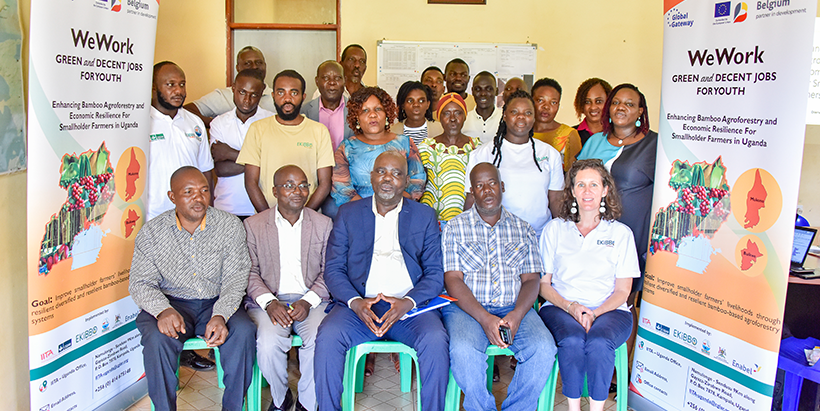
Participants of the Buikwe district.
With a total funding of 250,000 euros and a duration of 2 years, the WeWork project, through which this initiative is being implemented, targets 750 smallholder farmers (>35% women, 15% youth). “Farmers working with Ekibbo have already seen increased income from bamboo production,” said Sophie Arcedeckne-Butler. The project promises to transform farming practices, empower youth, and restore degraded ecosystems in Uganda.
Contributed by Moureen Awori (IITA-Uganda), Christopher Wanda (Mukono District), Diana Kirungi (IITA), and Jovia Kavulu (Enabel)


No Comments