
Soybeans have steadily emerged as one of the most strategic crops across Africa. Its value spans multiple sectors, including nutrition, livestock feed, and agro-industrial development, making it a cornerstone of rural livelihoods and national economic growth. From soybean oil and soymilk to its critical role in the poultry industry, soybean is not just a crop; it is proving to be a driver of industries, income, and food security.
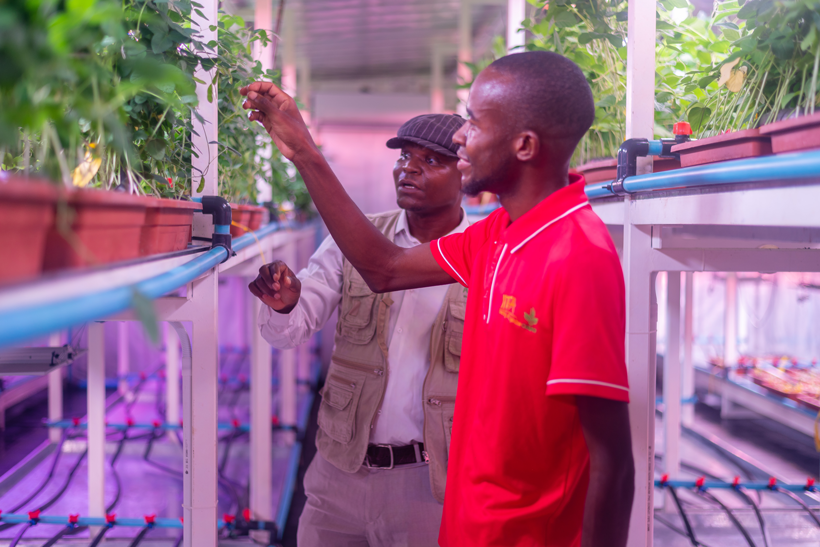
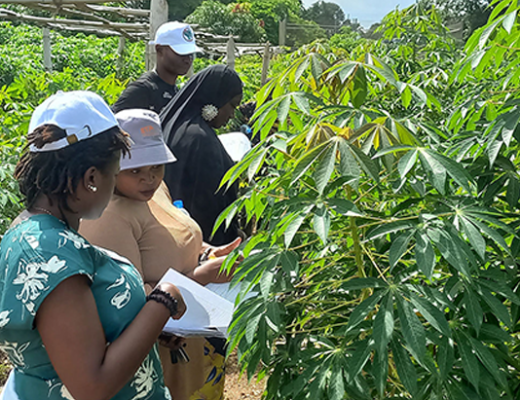
IITA Zambia staff checking soybean plants in the breeding facility.
With growing global demand, particularly from Asia, and the shifting dynamics in international markets, Africa is being called upon to play a larger role in soybean production.
However, achieving this requires one critical ingredient: better, faster, and more resilient varieties.
The challenge with conventional breeding
Traditionally, developing improved soybean varieties has been a long and resource-intensive process. Under conventional breeding approaches, it can take 6 to 8 years for a new variety to be ready for testing and eventual release to farmers. This timeline slows down innovation and delays farmers’ access to improved seeds.
In Southern Africa, the challenge is even more pronounced. For many farmers, especially those with limited resources, challenges such as disease pressure, particularly soybean rust, pose significant risks.
The cost of fungicides and the technical capacity required to manage diseases effectively are often out of reach. This creates a clear need for early- to medium-maturing varieties that are both high-yielding and disease-resistant.
Speed breeding: A game changer
To address these challenges in the region, the International Institute of Tropical Agriculture (IITA) in Zambia has established a transformative solution: Africa’s first speed-breeding facility.
Speed breeding is an advanced technique that accelerates plant growth by controlling environmental conditions such as light, temperature, and humidity. This allows researchers to produce multiple generations of crops within a single year, dramatically shortening the breeding cycle.
With the establishment of the soybean speed breeding Facility in Zambia, the timeline for developing new varieties is expected to reduce significantly from six to eight years under conventional methods to just four to five years.
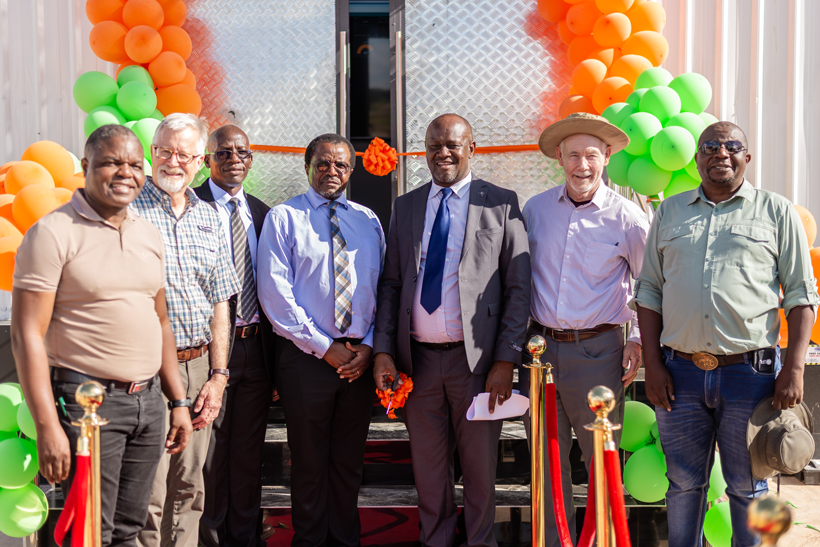
IITA Zambia Country Director, Dr David Chikoye with IITA scientists and partners.
The facility is the first soybean speed breeding facility in Africa and only the second on the continent, following a similar facility in Morocco focused on wheat and barley. What sets this facility apart is its focus on soybean and other tropical crops, including cowpea, making it highly relevant to the region’s agricultural needs.
Transforming soybean production in Africa
The implications of this innovation are far-reaching. By accelerating breeding cycles, the facility will increase the number of improved soybean varieties available on the market, reduce the time it takes for new varieties to reach farmers, enhance yield potential through better-performing genetics, and improve resilience to climate stress and diseases such as soybean rust.
During the facility’s inauguration on 30 March 2026, the Director of Agriculture at Zambia’s Ministry of Agriculture, Dr Chizumbna Shepande, highlighted that the facility would strengthen the region’s ability to respond to the growing demand.
“This facility strengthens our ability to respond to the growing global demand for soybeans, particularly in light of shifting international market dynamics.”
Aligning with Zambia’s agricultural vision
The establishment of the speed breeding facility aligns strongly with Zambia’s national agricultural priorities. With the government targeting one million tons of soybean production by 2030, the availability of improved, high-yielding varieties will be critical to achieving and potentially surpassing this goal.
Soybeans play a vital role in crop rotation systems, improving soil fertility and livestock feed supply chains, especially for poultry, and supporting agro-processing industries, creating jobs and economic opportunities.
As Dr Shepande noted, “Achieving this target requires innovation, improved seed systems, and access to high-performing varieties.”
Strengthening research and regional collaboration
While the facility primarily serves researchers, its impact extends across the agricultural ecosystem. It supports universities, research institutions, and regional breeding networks, including the Soybean Improvement Network funded by the Gates Foundation.
IITA Southern Africa Hub Director, Dr David Chikoye, emphasized the importance of farmer-centered innovation and further underscored the importance of partnerships.
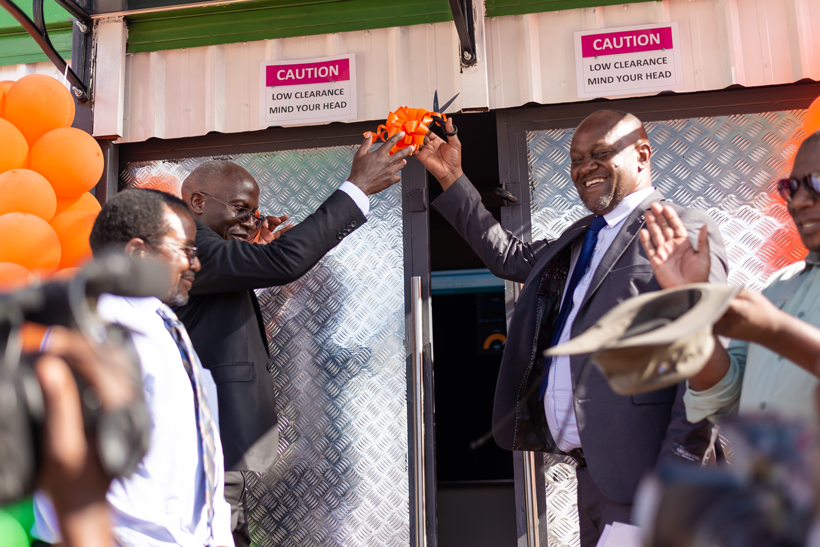
Ribbon cutting ceremony of the speed breeding facility in Zambia.
“Our focus is on developing early- to medium-maturing soybean varieties that are high-yielding, climate-resilient, and resistant to diseases such as soybean rust, traits that are critical for smallholder farmers. Through collaboration with the Gates Foundation, national institutions, regional networks, and global partners, we are strengthening soybean breeding systems across Africa and accelerating agricultural transformation.”
The Gates Foundation also highlighted the farmer-focused nature of the investment.
“This investment is targeted toward smallholder farmers, who are often underserved by the private sector. Through on-farm varietal testing, we can understand farmers’ preferences and align varieties accordingly,” said Dr Jeff Ehlers, who is the Senior Programs Officer.
A milestone for the future
The inauguration of the soybean speed breeding facility marks more than just the opening of a new research infrastructure; it represents a turning point in how crop improvement is approached in Sub-Saharan Africa.
By combining science, innovation, and strategic partnerships, the facility is set to transform soybean breeding timelines, expand access to improved varieties, boost yields and farmer incomes, and strengthen food systems across the region.
In a context where climate change, population growth, and global market pressures are reshaping agriculture, innovations like speed breeding are not just beneficial but also essential.
Looking ahead
As the facility begins operations, it signals a future where farmers have timely access to better seeds; researchers can innovate faster, and Africa strengthens its position in the global soybean market.
Ultimately, the soybean speed breeding facility is more than a technological advancement; it is a commitment to accelerating agricultural transformation, improving livelihoods, and building a more food-secure Africa.
Contributed by Rachel Namukolo-Nali

No Comments