
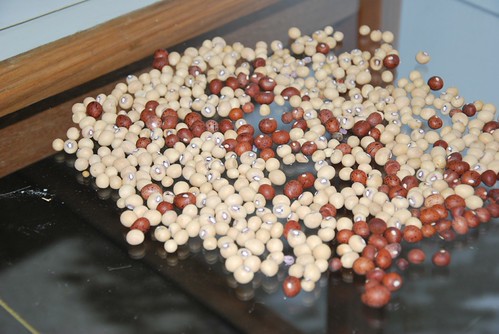
Bambara groundnut.
The Bambara groundnut (BGN) (Vigna subterranea), once labeled an orphan crop, has now assumed the status of an important underutilized nutritious, drought-resistant legume crop, and is now positioned as a promising future crop that is serving a varied choice of culinary purposes, including local delicacies, and more recently, plant-protein-based milk alternatives.
In countries like Nigeria, BGN is a vital food crop with diverse traditional uses. The seeds are often roasted, ground into powder, and added to soups. BGN can also be roasted and chewed alongside palm kernel nuts as a snack. Beyond human consumption, the seed haulms serve as valuable fodder for livestock and poultry, supporting sustainable agricultural practices in the region.
Despite the numerous benefits of BGN, processing its seeds into valuable food products generates wastes (such as husks, shells, haulms, and offal), which are often disposed of carelessly into the environment, thereby creating environmental hazards.
With this growing environmental challenge, comes the growing interest in adding value to the wastes generated from BGN and converting them into products that are useful for industrial purposes, as well as food and feed, and researchers from Nigeria, Rwanda and South Africa are unlocking new economic and environmental opportunities and exploring potential value-added products from Bambara groundnut waste, transforming what was once discarded material into valuable resources that support sustainable growth across Africa’s food systems.
A recent study carried out by scientists from IITA–CGIAR and members of the Society for Underutilized Legumes, Genetic Resource Centre, International Institute of Tropical Agriculture (IITA); University of Benin, Edo State; Bells University of Technology, Ogun State; Bowen University, Osun State; Delta State University, Delta State; University of Delta, Delta State; Institute of Agricultural Research and Training, Obafemi Awolowo University; Kings University, Osun State, Air Force Institute of Technology, Kaduna; University of Rwanda, and North-West University, South Africa explored the urgent need to convert BGN waste to valuable products with multiple benefits.
The study titled; “Cultivating value from waste: Creating novel food, feed, and industrial applications from Bambara Groundnut by-products,” published in Sustainability journal highlights the lignocellulosic composition – the dry, fibrous, non-edible organic matter derived from BGN residues which are ideal for generating biogas and bioethanol. Beyond providing alternative energy, BGN wastes can be transformed into various bio-based products, including adsorbents for heavy metal removal, activated carbon for water purification, and bioplastics.
According to the study, the nutritional content also enables the extraction of valuable components, such as dietary fiber, protein concentrates, and phenolic compounds, for food products or animal feed. The nutrient-rich organic matter can also be composted into fertilizer, improving soil fertility.
These valorization – the process of maintaining the value – strategies offer multiple benefits, such as reduced waste, less environmental contamination, and lower greenhouse gas emissions, alongside new revenue streams for agricultural producers.
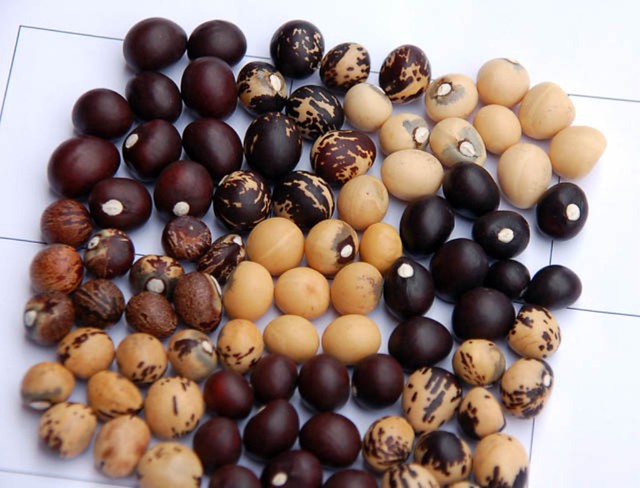
Bambara groundnut.
Also, with the growing interest in organic and sustainable farming methods, and the Nigerian government, alongside universities and research bodies, such as IITA-CGIAR, the Nigeria Institute for Oil Palm Research (NIFOR), and the Projects Development Agency (PRODA), actively championing biofertilizers to boost food security and rejuvenate soil health, BGN waste composting or anaerobic digestion produces nutrient-rich organic fertilizers. These fertilizers can significantly improve soil health and crop yields. Post-composting, the NPK (nitrogen/phosphorus/potassium) content typically ranges around 2-1-2, thus providing essential macronutrients for plant growth.
Being a highly nutritious and drought-resistant African legume that thrives in poor soils with minimal inputs, BGN, known for its resilience and rich nutritional profile, is gaining recognition as a key player in advancing food security, improving health, and boosting farmer income, and with the crop are by-products, including shells, leaves, and offal, with numerous potential uses.
In livestock farming, Bambara offal serves as a cost-effective feed ingredient, enhancing animal growth and performance without adverse effects. This offers farmers a cheaper and more sustainable alternative to conventional animal feed.
Additionally, Bambara shells can be processed into biochar, a natural fertilizer that improves soil fertility, enhances nutrient retention, and supports crop productivity. Beyond agriculture, Bambara waste has also shown promising health benefits. It is rich in fiber, antioxidants, and natural compounds that aid digestion, prevent food spoilage, and combat harmful microbes. These properties have led to the development of healthy food products such as Bambara milk and probiotic drinks.
The study highlighting these benefits also showed that valorizing BGN waste offers vast opportunities to create green jobs, open new markets, and promote a circular economy. However, it emphasized that challenges such as limited processing technologies, inadequate infrastructure, low consumer awareness, and weak policy support must be addressed to fully realize these benefits.
To fully realize the economic and long-term advantages of generating value from Bambara groundnut by-products – biofuel, livestock feed, fertilizers, mushroom cultivation, etc., collaborative networks, robust partnerships, coordinated research, infrastructure development, private sector engagement, and policy support are essential going forward.
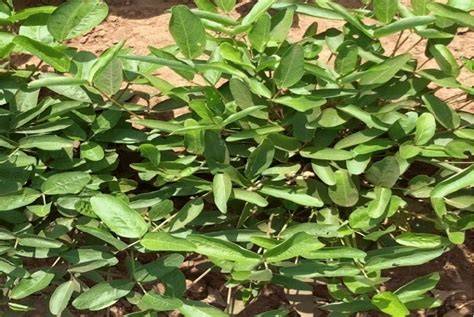
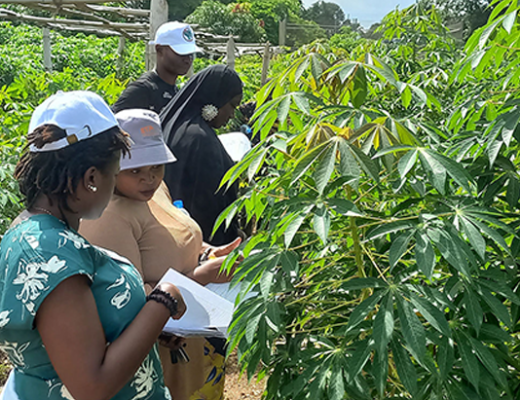
Seven weeks old Bambara groundnut plant on the field.
According to the study, overcoming these challenges will ensure the optimal use of Bambara groundnut waste to improve food security, sustainable livelihoods, and environmental sustainability not only in Africa but globally.
The investigation of the “gold” concealed in Bambara groundnut (BGN) waste represents a revolutionary shift toward a circular bio-economy, in which environmental risks are transformed into valuable industrial assets. This collaboration is a potent affirmation of the Society for Underutilized Legumes (SUL) and IITA-CGIAR’s goal to bring “orphan crops” to the world’s attention, proving that these hardy legumes are not only protectors of food security but also vital sources of sustainable materials and renewable energy. This multi-institutional partnership offers a scalable model for climate-smart innovation throughout the African continent by bridging the gap between regional agricultural traditionalism and contemporary biotechnology.
At the national level, this initiative offers a tangible roadmap for Africa’s economic diversification and environmental goals. By converting husks and offal into cost-effective livestock feed and biofertilizers, the nation can significantly reduce its reliance on expensive chemical imports while simultaneously creating “green jobs” in rural communities. Ultimately, this synergy between academic researchers, international bodies, and local producers ensures that the BGN becomes a cornerstone of a self-sufficient future, proving that the path to sustainable growth lies in unlocking the full, untapped value of our indigenous biological resources.
Contributed by Alice Omoteji, Beckley Ikhajiagbe, Taofeek Gboyega and ‘Timilehin Osunde.

No Comments