
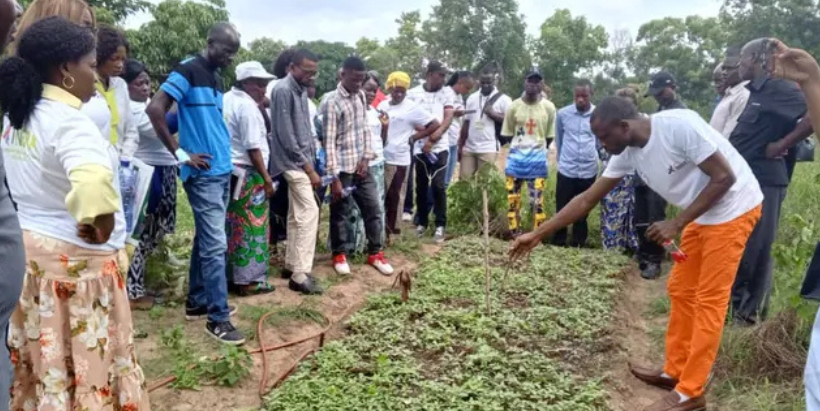
With the aim of equipping agri-entrepreneurs with knowledge on the production of organic fertilizers from waste from feeding the black soldier fly (digestate), the International Institute of Tropical Agriculture (IITA) in partnership with the National Institute for Agronomic Study and Research (INERA) organised a training workshop on 6 January 2025 in the Koppia room of the University of Kinshasa (UNIKIN) with a participation of 50 people including 24 men and 26 women.
This training is part of the implementation of the activities of the BBEST project (BSF for Bio Circular Economy and Environmental Sustainability) funded by the Norwegian Agency for Development Cooperation (Norad).
This workshop was structured in two parts. The first part concerned the rearing of the black soldier fly, with a general overview of its origin and some fundamental characteristics of the species that make it a good candidate for rearing without risk to humans and animals. These characteristics include the species’ expansion throughout the intertropical zone despite its American origin, its richness in proteins and lipids, making it an extremely interesting alternative food source for various livestock sectors (chickens, fish, and pigs), and its harmlessness to humans (i.e., it does not bite).
It was emphasized that using larvae for animal feed and organic fertilizers from livestock farming for vegetable production constitutes an innovative and sustainable solution, offering farmers an effective way to reduce costs while increasing productivity. Furthermore, integrating black soldier fly larvae and organic fertilizer into agriculture contributes to environmental preservation.
After following the explanations on the rearing of the black soldier fly, the participants visited the black soldier fly larvae production unit to follow the different stages of rearing from the collection of waste to the collection of eggs, pre-pupae and pupae to the obtaining of the fly.
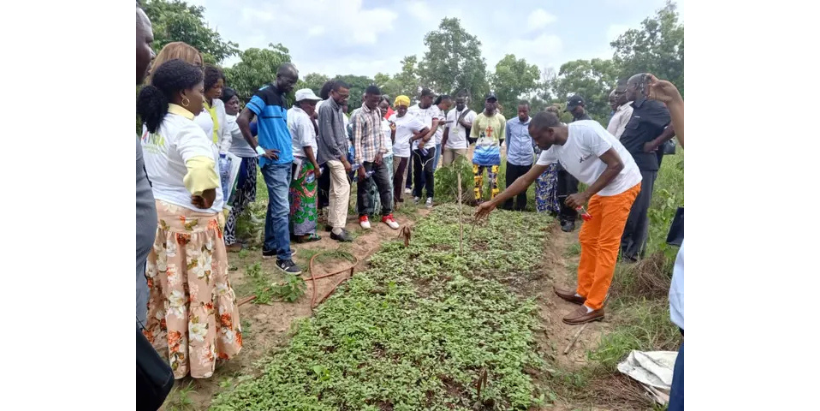
The second part of the workshop focused on training participants on the use of organic fertilizers derived from black soldier fly larvae. It was explained that the residue obtained after the larvae digest organic matter constitutes a rich fertilizer and can be used, after composting, as an organic amendment to fertilize crops. Participants were reminded that organic fertilizer allows for the cultivation of healthier vegetables and reduces the ecological footprint. Advice was given to participants to adopt these agroecological practices to ensure the sustainable management of their resources by reducing chemical inputs. The participants visited several garden plots prepared and fertilized with organic fertilizers from black soldier fly larvae at the University of Kinshasa.
Eight members from our five beneficiaries of the decentralized black soldier fly production units participated in this workshop with the aim of increasing their knowledge, including two members of the Kimbanseke Centre Agricultural Cooperative (COOPACEK), two members of the N’djili Market Garden Centre Agricultural Cooperative (COOPACEN), two members of the Association of Fish Farmers for Development in Congo (APIDEC) and two members of the Judith farm.
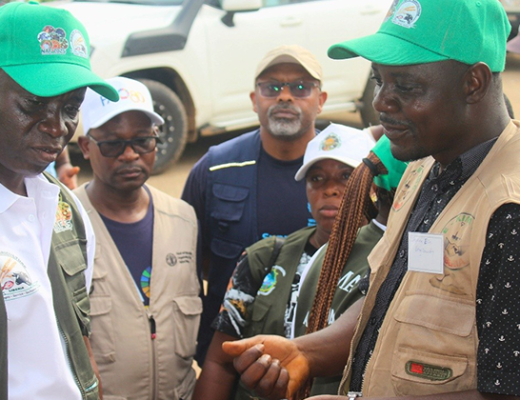
This training course concluded with the presentation of a certificate to each participant.



No Comments