
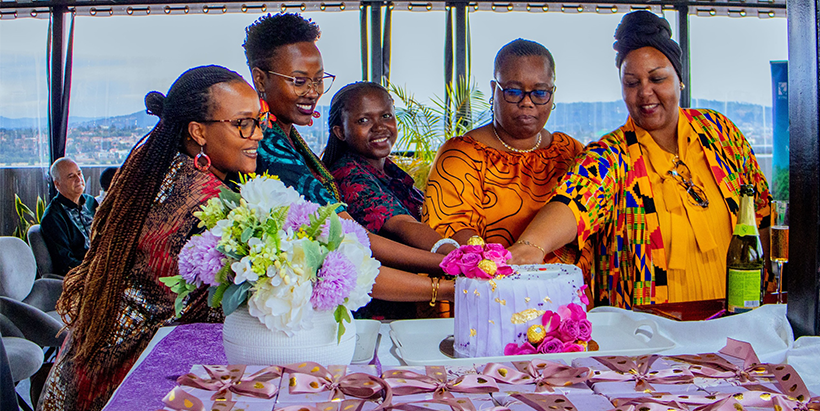
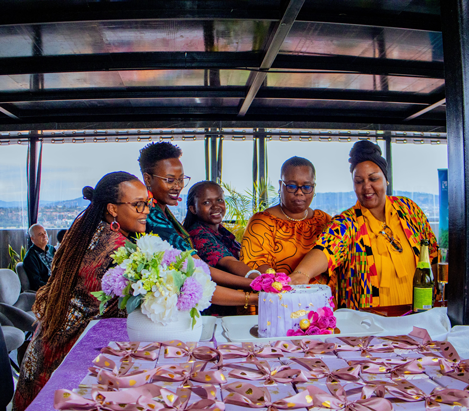
(from left to right) Solange Zawadi, IFPRI Rwanda; Dr Solange Uwituze, Minister of State in the Ministry of Agriculture and Animal Resources in Rwanda; Hyacinthe Nyirahabimana, CIP Rwanda; Justine Umutoni, Alliance of Bioversity International and CIAT; and Justine Mucyo, IITA Rwanda.
“Refuse to be a victim of your circumstances, believe in your strengths, work hard, and seize every opportunity.”
With these powerful words, Dr Solange Uwituze, Rwanda’s Minister of State in the Ministry of Agriculture and Animal Resources, set the tone for the International Women’s Day celebration hosted by CGIAR in Rwanda. Drawing from her own journey marked by resilience and determination, she encouraged women across the agrifood sector to pursue their ambitions boldly and to position themselves as voices for those who are often unheard.
The celebration, held under the theme “Empowered women, transforming agrifood systems,” reflects on the progress made in advancing women’s leadership while openly discussing the persistent challenges that continue to limit inclusive transformation.
Sharing her personal story, Dr Uwituze spoke candidly about the setbacks she encountered throughout her career. Rather than allowing obstacles to define her path, she chose resilience.
She explained that, as a woman, she encountered several setbacks along the journey but refused to be a victim of her circumstances. Rather, she kept believing in her strengths and abilities, remained resilient and hardworking, and grabbed every opportunity that came her way because she had a goal: to be a voice for the voiceless.
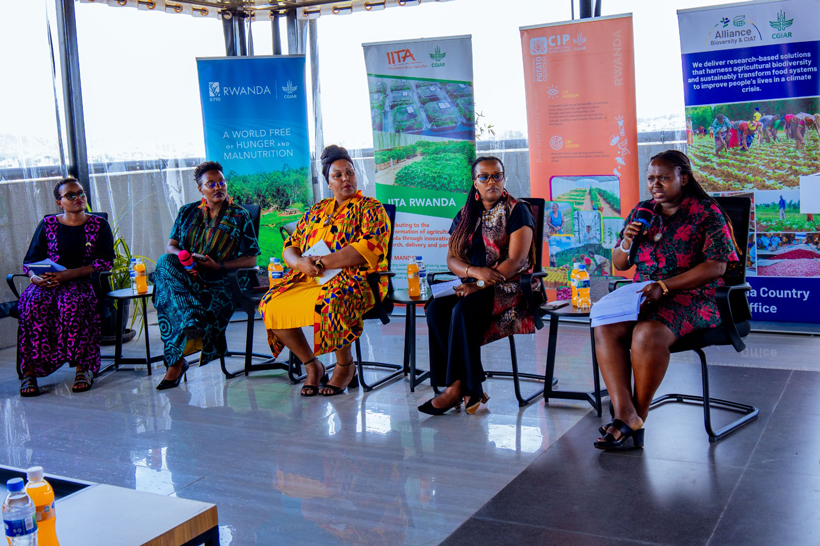
Panel discussion during the International Women’s Day celebration.
Her testimony resonated deeply with participants, particularly young professionals and researchers navigating leadership spaces.
A panel discussion featuring women from CGIAR centers operating in Rwanda: the International Food Policy Research Institute (IFPRI), the International Potato Center (CIP), the Alliance of Bioversity International and CIAT (ABC), and the International Institute of Tropical Agriculture (IITA), highlighted the catalytic role women play in shaping agrifood systems.
Panelists emphasized that women are central to agricultural food systems. However, their contributions are not always reflected in decision-making platforms.
Hyacinthe Nyirahabimana, a PhD student at CIP, reminded women that opportunities must be actively pursued.
“Everything is earned, not given, and there is no manuscript for it to be easy or difficult. If you have opportunities available for women, make use of them and embrace your unique strengths to create impact in your area of work.”
Justine Mucyo from IITA underscored the importance of excellence and continuous self-development.
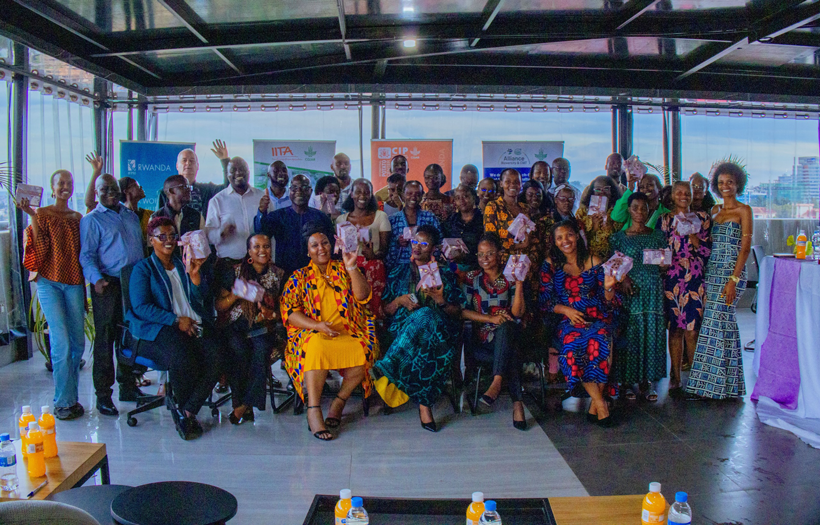
Participating staff from CGIAR Centers in Rwanda (IITA, IFRI, ABC, CIP).
“To earn our space as women, we must put more effort into what we do, enhance our skills, and attend networking programs that enable us to truly deserve that space.”
From the perspective of representation and inclusion, Justine Umutoni from ABC stressed the importance of women’s voices in program design and implementation.
“Leaving me behind would create an imbalance in decision-making. Women’s voices must be heard to ensure inclusive decisions across programs.”
Meanwhile, Solange Zawadi from IFPRI shed light on the complex realities women face in balancing professional responsibilities with family life.
“There is no clear-cut way to balance career and parenthood as a woman. Society has not yet fully embraced women’s empowerment, sometimes viewing it as a threat due to cultural beliefs. Yet women have so much to offer, despite carrying heavy daily responsibilities at home and at work.”
Reinforcing CGIAR’s institutional commitment to gender inclusion, Matieyedou Konlambigue, IITA Rwanda Country Representative and CGIAR Country Convener (a.i.), emphasized the organization’s deliberate efforts to foster inclusive work environments.
“CGIAR has made progress toward gender equality and women’s empowerment due to intentional actions at different levels. However, there is still more to be done. Across our projects and programs, we are committed to fostering inclusivity to ensure that impact is achieved without leaving anyone behind. We urge young women scientists and professionals to take full advantage of the many opportunities being created to advance their careers.”
In her closing remarks, Dr Uwituze commended CGIAR centers for increasing women and youth representation within their teams. However, she challenged institutions to move beyond numbers and ensure that policies genuinely support women’s well-being and productivity.
“I am glad you have a strong starting point, with many women on your teams. I challenge you to ensure that the women who work here truly enjoy what they do. Women are biologically and socially complex; our policies must embody both equity and equality. Provide flexible schedules and set clear KPIs that allow them to deliver better and happier.”
Contributed by Ritha Bumwe

No Comments