
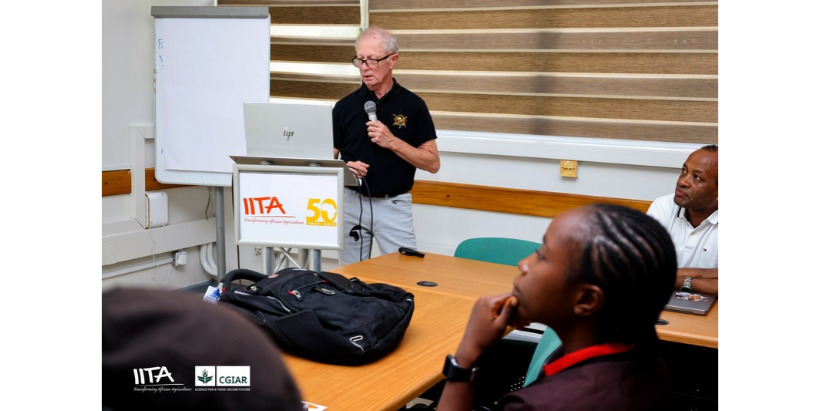
Professor Carlos Iglesias sharing insights from decades of research and his passion for exploring biodiversity and adaptive breeding in African crops.
As part of the working visit of Dr Makram Geha, Director of the CGIAR Breeding for Tomorrow (B4T) Science Program, to IITA–CGIAR, Professor Carlos Iglesias of North Carolina State University (NCSU) delivered an engaging seminar that took participants on a journey through decades of plant breeding, biodiversity research, and innovation in African crops.
Hosted during his working visit to the Yam Breeding Unit, the seminar, titled “Exploring biodiversity in African crops through adaptive selection,” highlighted the vast opportunities hidden within Africa’s rich crop diversity and the role of adaptive breeding in unlocking them.
From the outset, Prof Iglesias connected his scientific journey to his personal story. Growing up in a small agricultural town of just 300 people in southwest Uruguay, he developed an early appreciation for farming and food production. He recalled how his grandmother’s fascination with gardening and her concern for people in Africa inspired a lifelong passion that eventually led him to work with African crops.
“Every time I land here in Africa, I think of my grandmother,” he told participants. “That is one of the reasons why I love coming here, I love working on African crops, and I love working for Africa.” His career has spanned academia, international agricultural research, and the private sector. Along the way, he built extensive experience in crop improvement, including nearly a decade of cassava breeding, leadership roles in seed production and crop research, and his current position as Professor of Horticultural Science at NCSU.
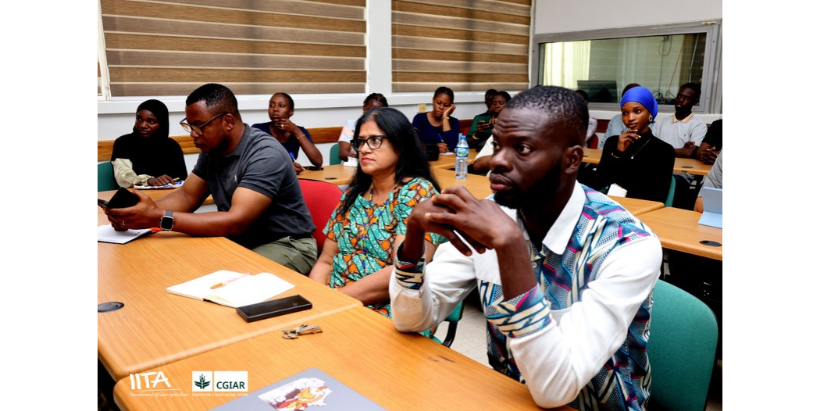
IITA–CGIAR breeders, scientists, and students listening to Professor Carlos Iglesias’s seminar presentation on biodiversity and adaptive breeding.
During the seminar, Prof Iglesias painted a compelling vision of the future—one in which plants serve not only as food but also as sustainable sources of materials, industrial products, and bio-based innovations. “We envision a world in which plants provide the basic building blocks, not only for food but also for materials,” he explained. “We want to discover, isolate, optimize, and commercialize valuable plant compounds in ways that benefit farmers, industry, and consumers.”
He emphasized the growing global shift toward healthier diets, environmentally friendly production systems, and the replacement of synthetic chemistry with natural alternatives. According to him, biodiversity conservation must go hand in hand with understanding and utilizing the valuable traits and compounds hidden within plants. Drawing from ongoing research at NCSU, Prof Iglesias shared examples involving African crops such as amaranth, okra, kenaf, and yams. These crops, he noted, possess significant but often underexplored potential for nutrition, health, and industrial applications.
One crop that particularly captured the audience’s attention was kenaf. Prof Iglesias described its remarkable growth performance in North Carolina and its environmental benefits, including its ability to capture substantial amounts of carbon. He highlighted the crop’s highly absorbent core and its potential use in sustainable products such as biodegradable diaper fillers and paper towels, positioning kenaf as a promising alternative to hemp in several industrial applications.
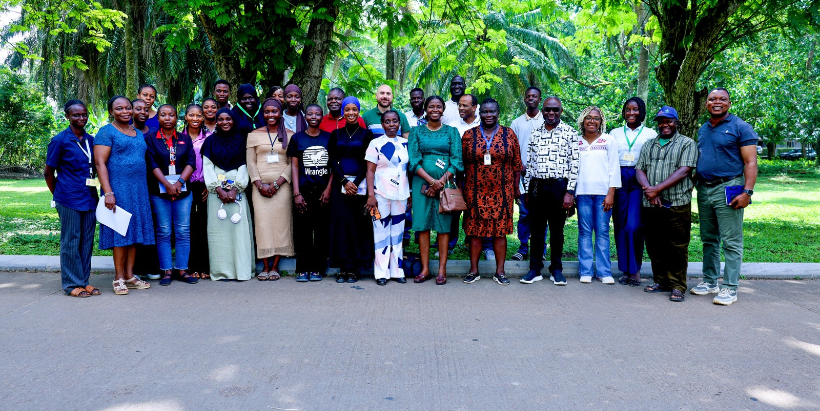
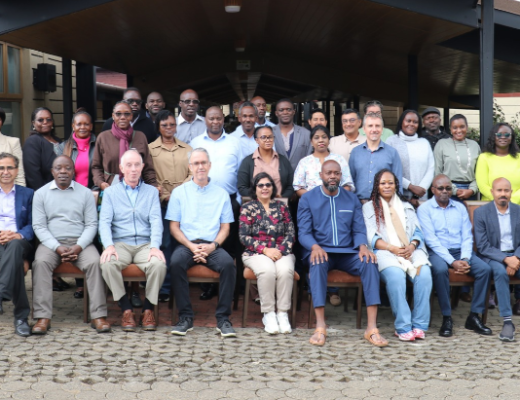
Participants pose for a group photograph after the seminar, inspired by Professor Carlos Iglesias’s remarkable journey and contributions to advancing sustainable food systems through African crop research and innovation.
The seminar also showcased the practical impact of partnerships with African research institutions. Prof Iglesias recounted how germplasm provided by IITA–CGIAR contributed to the development efforts of a Bambara groundnut company in Singapore, illustrating how African crop diversity is finding value in global markets. His passion for yam research was equally evident. Having collaborated with IITA–CGIAR through advisory and research engagements, he expressed enthusiasm about expanding work on the crop and supporting ongoing breeding efforts.
Among the research questions currently exciting his team is whether yams can successfully tuberize under North Carolina’s latitude, how tubers can be preserved and induced to sprout efficiently, and how innovative breeding approaches can support future crop improvement. Prof Iglesias also spoke about efforts to develop transgene-free gene-edited materials and explore new industrial uses for yams, particularly in starch production. While cassava starch is relatively easy to extract, he explained that yams present unique challenges that require further research and innovation.
Throughout the seminar, participants were treated to stories from a career devoted to connecting biodiversity, breeding, and market opportunities. His presentation demonstrated how scientific curiosity, coupled with strategic partnerships, can transform underutilized crops into solutions for food security, sustainability, and economic development.
Concluding his presentation, Prof Iglesias reaffirmed his commitment to African agriculture and to strengthening collaborations with IITA–CGIAR and its partners. “I am happy to work with IITA, even as a ‘yambassador’ or in any capacity for that matter,” he said with a smile. “I love working with African crops.”
His seminar offered more than scientific insights—it was a reflection on decades of investment in crop improvement, a celebration of Africa’s rich biodiversity, and an inspiring reminder of the possibilities that emerge when research is driven by passion, purpose, and partnership.
Contributed by Folake Oduntan


No Comments