
Across Nigeria’s tomato fields, smallholder farmers are navigating a rapidly transforming food system, shaped by growing urbanization, rising incomes, shifting diets toward fresh, safe, high-quality food. This has fueled the growth of midstream actors, such as aggregators, wholesalers, transporters, and processors who connect farmers to urban markets. While formal contract farming has long dominated, policy debates on market access and farm-level improvement, new research suggests that Nigeria’s largely informal tomato markets especially aggregators and wholesalers may be quietly playing a far more constructive role than previously assumed. These informal market actors are helping smallholder farmers adopt better farming and handling practices, with important benefits for food safety, farmer incomes, and food security.
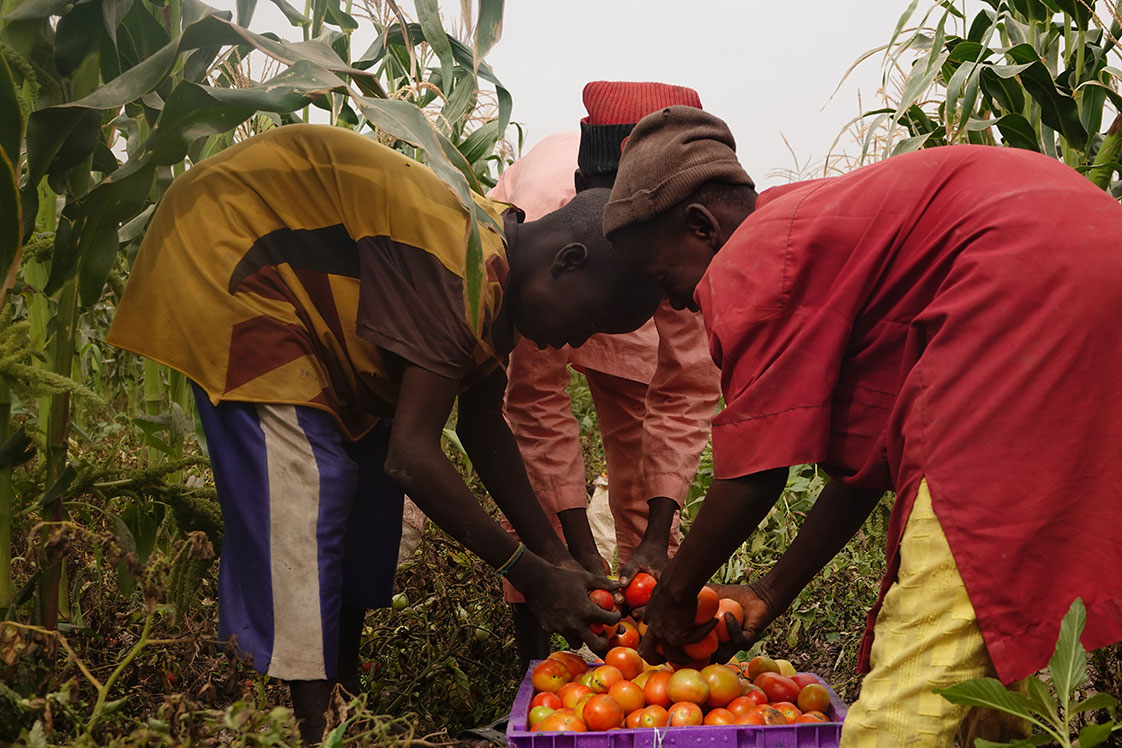
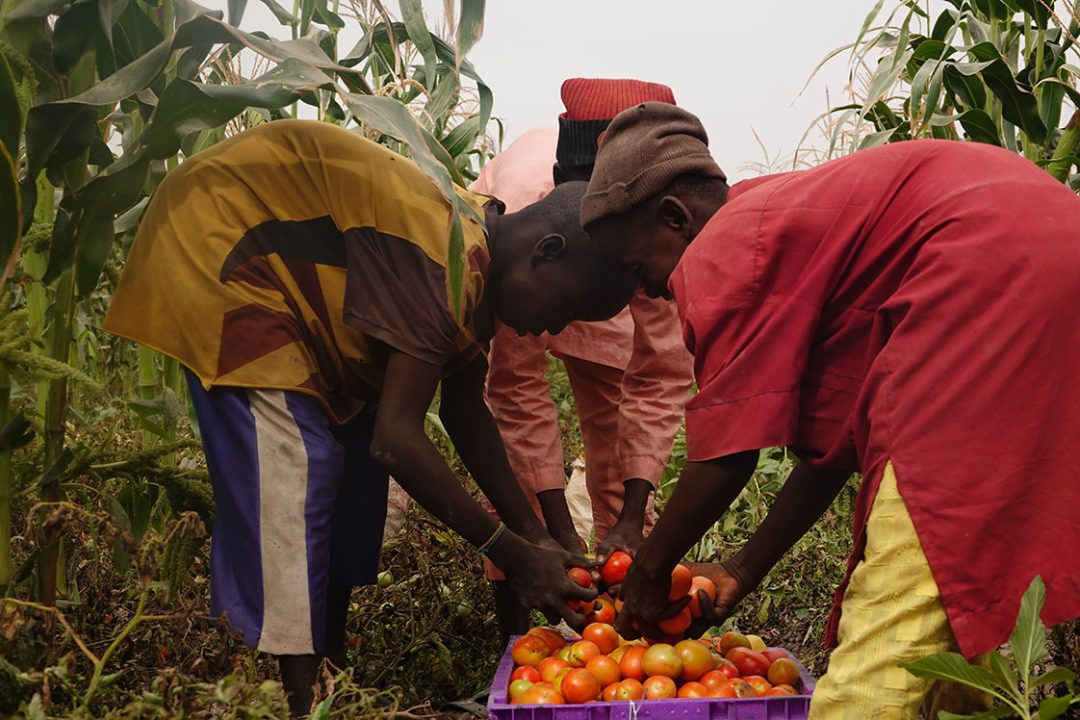
Farmers sorting tomatoes on the farm before transporting to the market. (Credit: Bunkasa Agritech Limited)
A recent study published in the Food Security journal, titled “Market channel and other drivers of tomato farmer production and handling practices in Nigeria” provides compelling evidence that informal tomato market relationships, may be playing a far more important role in improving farming practices and food safety than previously understood, revealing that midstream actors such as wholesalers and aggregators can positively influence smallholder behaviour even in the absence of formal contracts.
According to Agricultural Economists from IITA–CGIAR and Michigan State University, the adoption of good agricultural practices (GAP) and good handling practices (GHP) by farmers are being shaped by everyday trading relationships with midstream actors. These actors are often said to exploit farmers. However, their real influence on how farmers grow, handle, and market food has remained largely unexplored. Drawing on survey data from 1,673 tomato farmers across Nigeria, the study challenges the perception that informal value chains are inherently exploitative or incapable of supporting food system transformation, highlighting how daily market activities may be determining the quality and safety of food reaching households across the country. The study also sought to understand the factors driving farmers’ choice of market channels and how these choices shape production and handling decisions.
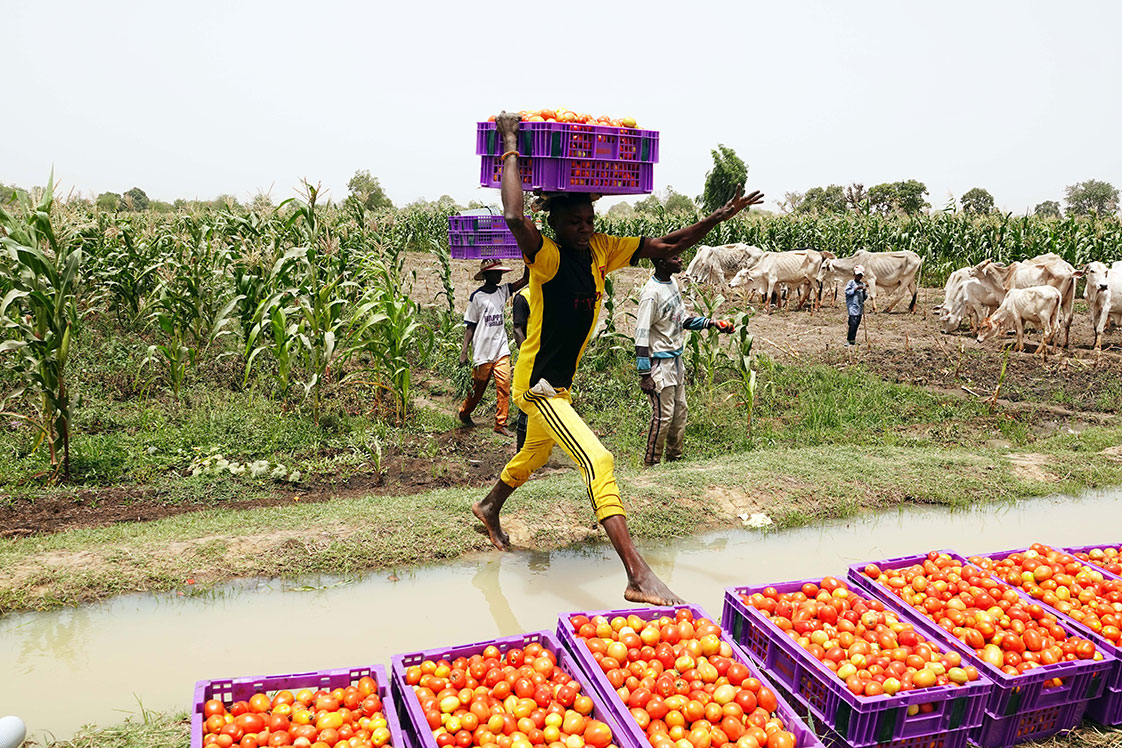
Farmer moving tomato crate to assembly point on the field. (Credit: Bunkasa Agritech Limited)
The study focused deliberately on non-contract farming, which accounts for most smallholder sales in LMICs. They assessed three recommended pre-harvest practices and five harvest and post-harvest practices relevant to tomato production during the 2022/2023 production season. Nigeria’s fresh tomato value chain offers an ideal setting to examine these dynamics. Tomatoes are widely consumed, highly perishable, and produced mainly by smallholder farmers. Most tomato farmers sell through informal but repeated relationships with aggregators and wholesalers rather than through formal contracts. Tomatoes are typically grown in northern Nigeria and transported to large southern markets, such as Lagos and Ibadan, through networks of local aggregators who collect produce, arrange transport, and supply wholesale markets like Mile-12 in Lagos and Akinyele in Ibadan.
According to the study, farmers with larger farm sizes and those using modern irrigation systems are more likely to sell to midstream actors such as aggregators and wholesalers. The findings also indicated an increase in the adoption of both GAP and GHP was associated with selling through these channels. Smaller-scale farmers’ engagement with wholesalers and aggregators appears to encourage better adoption of GAP and GHP practices. This suggests that demand signals and quality requirements transmitted through informal market relationships may be influencing how farmers manage production and post-harvest activities. These farming and handling practices are not just about higher yields. When farmers harvest at the right time and handle tomatoes carefully, consumers get fresher, safer, and better-quality food—something that matters deeply in cities where most food is bought through informal markets.
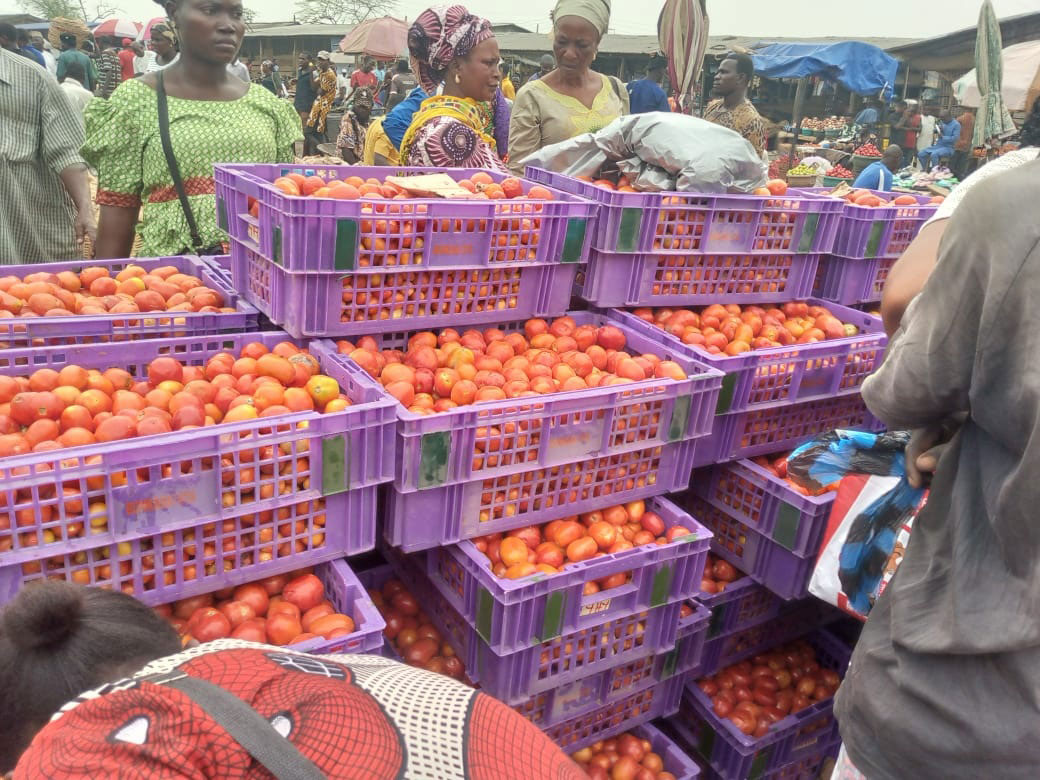
A tomato stand in a major produce market in Lagos, Nigeria. (Credit: Bunkasa Agritech Limited)
The study also found that farmers selling to aggregators and wholesalers received 30% and 20% higher selling prices than selling to retailers. For smallholder families who depend on tomato sales for income, these price differences are huge. They create strong motivation to meet quality expectations.
While the study did not indicate whether wholesalers and aggregators actively train farmers or simply require better practices before buying, it concludes that informal midstream actors are not merely intermediaries in Nigeria’s tomato value chain but may be playing an important role in shaping farmer behaviour and improving food system outcomes. For policy makers and stakeholders in food and market systems, this research offers recommendations that can help strengthen linkages between smallholders and these actors offering a practical pathway for scaling improved agricultural practices without relying solely on formal contract farming systems.
Contributed by Alice Omoteji, ’Timilehin Osunde and Mesay Yami Gurmu

No Comments