
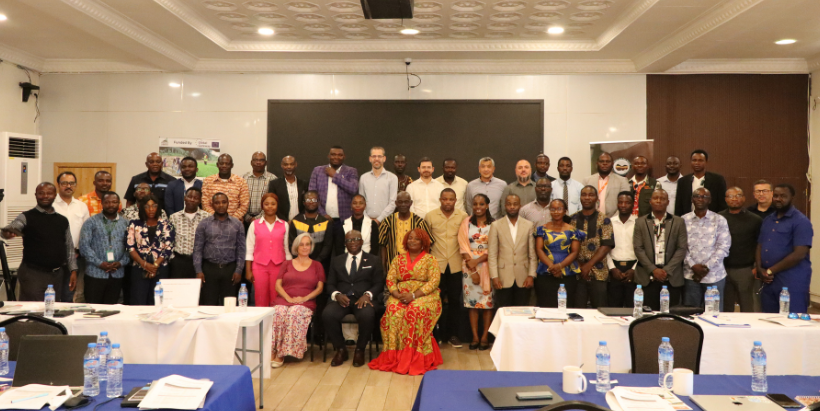
National and international partners including representatives of the European Union.
Liberia’s efforts to strengthen agricultural planning, improve soil management, and build a more sustainable food system are receiving renewed attention as IITA, with support from the European Union (EU), leads national and international partners in a five-day Annual Planning, Coordination and Stakeholder Engagement Workshop under the Liberia Land and Soil Resources Knowledge Project (Soils4Liberia).
The workshop, held from 26 to 30 October 2026 at the Bella Casa Hotel Conference Hall in Monrovia, brought together government institutions, research organizations, soil information specialists, and development partners to review project implementation, strengthen collaboration, and advance the development of Liberia’s national soil information infrastructure.
More than a coordination meeting, the workshop focused on addressing a longstanding challenge in Liberia’s agricultural sector: the need for reliable, accessible, and nationally managed soil and land resource information to guide decisions about agricultural investment, crop suitability, soil fertility, and sustainable land use.
At the center of this effort is IITA, the project’s lead implementing institution, working with the Ministry of Agriculture (MoA) and technical partners to strengthen Liberia’s capacity to generate, analyze, manage, and apply soil data and information for agricultural development.
Building a foundation for evidence-based agriculture
Agriculture remains central to Liberia’s food and nutrition security, improvement of rural livelihoods, and economic development. However, effective agricultural planning and decision-making processes depend on understanding the land on which farming takes place, including its physical and chemical properties, fertility status, and suitability for different crops. Without comprehensive and accessible soil information, farmers, policymakers, researchers, and investors face challenges in making decisions about crop production, fertilizer application, land management, and agricultural development priorities.
The Soils4Liberia project seeks to help address these information gaps by strengthening the country’s soil information systems and building the technical and institutional capacity required to sustain them. The project is working toward developing a national soil information system and associated knowledge to support evidence-based agricultural decision-making. Its work includes soil and land resource inventory, soil suitability mapping, laboratory capacity development, data management, and institutional strengthening.
The initiative also supports the broader objective of ensuring that soil information generated through research and field investigations becomes a practical resource for government institutions, agricultural professionals, development partners, and other users.
With IITA providing implementation leadership and coordinating technical collaboration, the project brings together expertise from the International Soil Reference and Information Center (ISRIC), the Hungarian University of Agriculture and Life Sciences (MATE), the Regional Hub for Fertilizer and Soil Health for West Africa and the Sahel, the University of Liberia (UL), and the Central Agricultural Research Institute (CARI).
The European Union supports the project, while the Ministry of Agriculture serves as a key national counterpart in advancing institutional ownership and the long-term use of the systems being developed.
The project also engages a broad network of national beneficiary institutions whose mandates are linked to land administration, agriculture, natural resource management, geospatial information, and investment. These include the Liberia Land Authority (LLA), Liberia Institute of Statistics and Geo-Information Services (LISGIS), National Bureau of Concessions (NBC), Forestry Development Authority (FDA), Liberia Agriculture Commodity Regulatory Authority (LACRA), National Fisheries and Aquaculture Authority (NaFAA), and National Investment Commission (NIC).
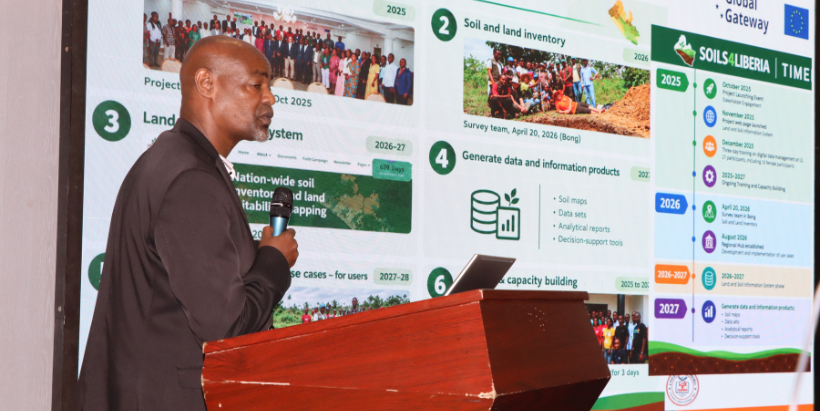
Project Manager, Dr Abebe Shiferaw Dakka, gives an overview of the status of the project.
Partners reaffirm commitment to a shared vision
The workshop opened on Monday, 26 October, with welcome remarks by Dr Samuel A. Mesele, Soil Scientist and Technical Lead, who highlighted the importance of the engagement in strengthening coordination and advancing the project’s objectives. Dr Abebe Shiferaw Dakka subsequently presented an update on the project’s implementation status, providing participants with an overview of progress and key areas requiring continued attention.
The opening session also featured statements from participating partners, providing an opportunity to reaffirm their commitment to working together towards strengthening Liberia’s capacity for soil information management.
Representing the Minister of Agriculture, Deputy Minister Hon. Solomon Hedd-Williams underscored the importance of reliable soil information to Liberia’s agricultural transformation.
“Building a reliable national soil information system is essential to transforming Liberia’s agricultural sector. The knowledge generated through the Soils4Liberia Project will strengthen evidence-based decision-making, improve land-use planning, and help ensure that our agricultural development strategies are informed by reliable soil data. We appreciate the commitment of our partners in advancing this important national priority,” he said.
The European Union Delegation to Liberia, Maria Winnubst reaffirmed the EU’s commitment to supporting the country’s efforts to strengthen its land and soil information systems, emphasizing the importance of building national capacity alongside technical infrastructure.
“The European Union is proud to support Liberia’s efforts to strengthen its land and soil information systems. Through Soils4Liberia, we are investing not only in technical knowledge and infrastructure but also in national capacity to promote sustainable agriculture, improve soil health, and build a more resilient food system. This partnership reflects our commitment to supporting Liberia’s long-term agricultural development,” she said.
The statements reinforced two important dimensions of the initiative: national institutional ownership and sustained development-partner support.
For a project focused on building systems that must remain functional beyond its implementation period, these relationships are essential. The success of a national soil information system depends not only on generating reliable data but also on ensuring that the responsible institutions have the skills, infrastructure, and resources to manage and apply that information
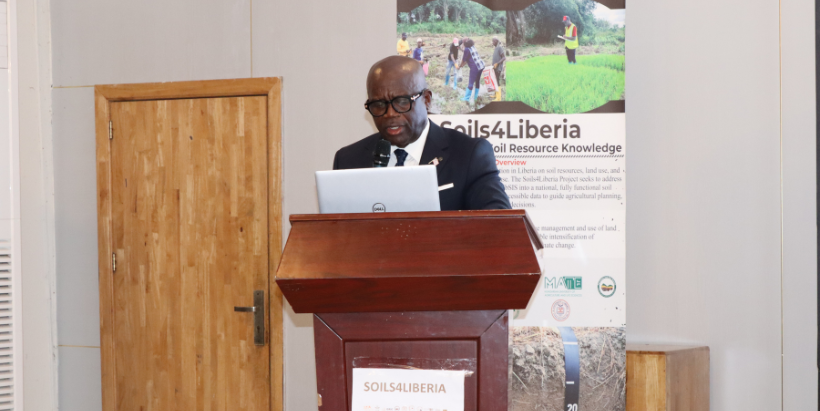
Deputy Minister for Technical Services, Hon. Solomon Hedd-Williams, representing the Minister in his speech, as he acknowledged the work of IITA and partners.
Technical assessment and institutional readiness
On Tuesday, 27 October, the workshop moved further into its technical phase, with a team led by IITA visiting the Ministry of Agriculture to assess its information technology infrastructure and institutional capacity. The delegation included representatives from IITA, ISRIC, MATE, and the Regional Hub for Fertilizer and Soil Health for West Africa and the Sahel.
The assessment focused on the Ministry’s existing IT infrastructure and technical capacity in view of its anticipated responsibility for managing the Liberia National Soil Information Center (LNSIC). It also reflects a central principle underpinning Soils4Liberia: national systems must be supported by capable institutions, qualified personnel, reliable infrastructure, and effective arrangements for long-term management. The proposed center is expected to serve as a central platform for managing and facilitating access to national soil and land resource information. Its effective operation will be important to ensure that data generated through field surveys, laboratory analysis, and other project activities can be organized, maintained, and made useful for agricultural planning and research.
By examining the Ministry’s existing capacity, IITA and its partners are working to identify infrastructure and technical requirements that need attention as the LNSIC moves toward operational readiness.
IITA-led partners meet with the Minister of Agriculture
A significant engagement on the second day of the workshop was a courtesy visit by IITA and its international partners to the Minister of Agriculture, Honorable Alexander Nuetah, PhD. The visit marked the first formal in-person interaction between the Minister and the project’s international partners.
During the meeting, the delegation briefed the Minister of Agriculture on Soils4Liberia’s objectives, implementation progress, and anticipated contributions to strengthening Liberia’s soil information systems. Representatives of the participating institutions also outlined their respective areas of expertise and roles in implementing the project.
Minister Nuetah expressed appreciation to IITA and the partners for their contributions and commitment to advancing the initiative. He acknowledged the distinct expertise each institution brings to the collaboration and highlighted the importance of their collective efforts in achieving the project’s objectives. The Minister also expressed optimism about the project’s anticipated results, emphasizing that partners’ technical expertise and coordinated efforts would translate into meaningful outcomes for Liberia’s agricultural sector.
The engagement reinforced the Ministry’s role as a key national counterpart, particularly regarding the anticipated management of the Liberia National Soil Information Center. It also provided an opportunity to strengthen government-partner engagement and ensure that the project’s work remains connected to the national agricultural development priorities.
For IITA and its partners, the meeting represented an important step toward fostering institutional ownership and sustaining high-level coordination in developing Liberia’s soil information infrastructure.
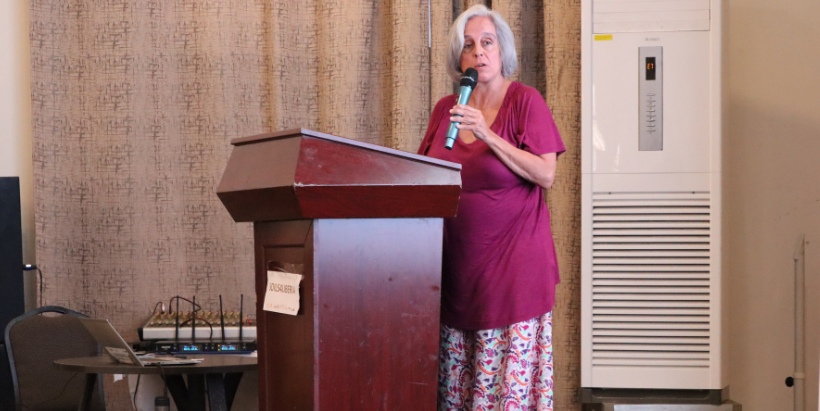
Maria Winnubst, representing the European Union Delegation to Liberia, delivering remarks with acknowledgement of IITA’s remarkable work.
Strengthening coordination and defining the way forward
As the workshop continued, partners got the opportunity to build on the opening discussions, technical assessment, and ministerial engagement. The project’s multidisciplinary nature makes coordination particularly important. Soil information system development requires several connected areas of expertise, including field data collection, laboratory analysis, geospatial information management, soil classification, data quality control and assurance, and the interpretation of findings for practical agricultural use. Field data must be properly analyzed, laboratory results must meet appropriate quality standards, and the resulting information must be organized to support reliable interpretation and future use.
For IITA and its partners, the workshop provided an opportunity to reinforce these connections, strengthen institutional collaboration, and maintain a shared understanding of implementation priorities.
Building a national soil information system requires more than acquiring technology or establishing a physical facility. It also requires qualified personnel, effective data management procedures, institutional coordination, and arrangements for maintaining the system over time. These considerations will be important as Liberia works toward a soil information platform that can serve a range of stakeholders, including government agencies, agricultural research and development institutions, academics, agricultural extension professionals, and farmers.
The climax: Visits to key soil information facilities
The workshop concluded on Friday, 30 October, with visits to two institutions central to the project’s long-term objectives: the proposed Soil Data Center at the Ministry of Agriculture, and the Soils Testing, Water and Plant Analysis Laboratory at the University of Liberia. The visit to the proposed data center provided an opportunity to examine the facility intended to support the management of the national soil information system. It will also connect the week’s discussions on institutional readiness and technical capacity with the practical requirements of establishing and operating the center.
The laboratory at the University of Liberia represents another important component of Liberia’s soil information infrastructure. Laboratory analysis is essential to generating reliable information about soil properties, helping researchers and agricultural professionals understand soil conditions and inform recommendations for improved soil management.
The visit highlighted the relationship between scientific analysis and information management. Laboratory testing and field investigations generate data that must be properly documented, managed, and interpreted to support research and agricultural decision-making.
Together, the two visits provided a practical conclusion to the workshop by connecting institutional coordination and technical discussions with the facilities that will contribute to Liberia’s developing soil information system. They will also highlight the complementary roles of the Ministry of Agriculture and the University of Liberia in supporting the generation, management, and use of soil information.
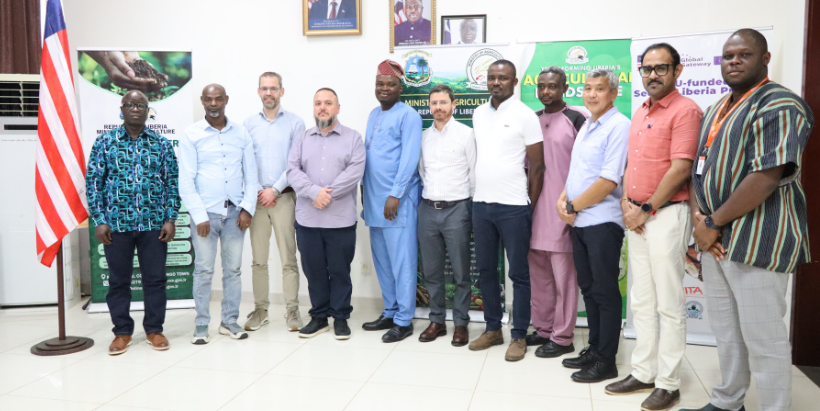
The delegation during the IT assessment and visit to the Minister of Agriculture.
Beyond the workshop: Building a lasting national resource
While the five-day engagement offers an important opportunity to review progress and strengthen collaboration, Soils4Liberia’s broader significance lies in what the project can help establish for Liberia’s agricultural future.
A functional national soil information system can provide a stronger evidence base for decisions about crop suitability, soil fertility management, fertilizer recommendations, land use, and agricultural investment. It can also improve access to information needed by researchers, policymakers, extension services, and development partners.
For farmers, better soil information can contribute to more informed decisions about managing their land and selecting appropriate agricultural practices. For policymakers, it can strengthen the evidence base for planning agricultural interventions and allocating resources. For researchers and technical institutions, it can support the systematic generation, management, and application of soil knowledge.
Achieving these benefits will depend on continued collaboration among national institutions and technical partners, as well as the capacity to maintain and use the systems developed through the project. This is why the Ministry of Agriculture’s anticipated role in managing the LNSIC is particularly significant. Institutional ownership and technical readiness will be essential to ensuring that the center becomes a sustainable national resource rather than simply a project-supported facility.
Through its leadership of Soils4Liberia, IITA is working with the EU, the Ministry of Agriculture, and other partners to advance the technical and institutional foundations required for this transition.
As the workshop came to an end, the focus remains on strengthening partnerships, assessing institutional needs, and advancing a shared vision for a more coordinated and evidence-driven approach to soil management in Liberia. Ultimately, the value of this collaboration will be measured not only by the infrastructure established or the data generated, but by how effectively Liberia can use reliable soil information to support agricultural productivity, sustainable land management, and long-term food security.
Contributed by Daniel Momo Sirleaf

No Comments