
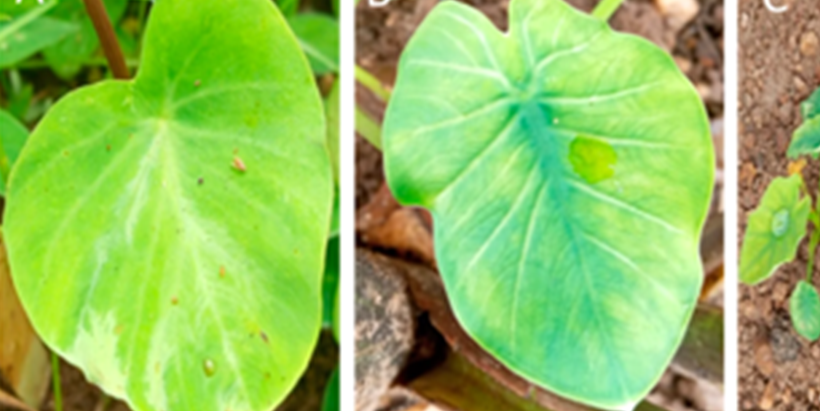
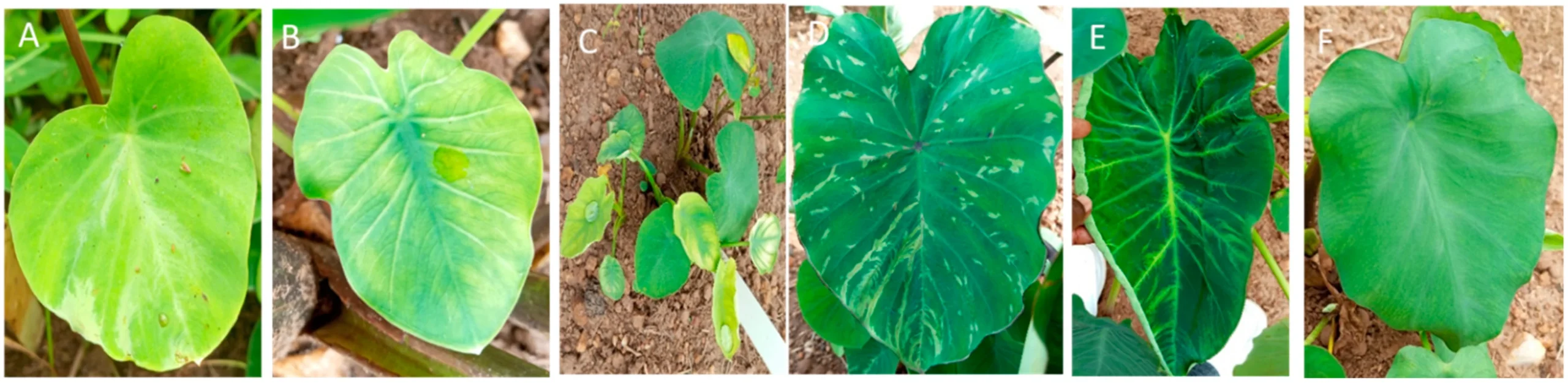
Virus symptoms shown by the collected samples. Image (A) shows the deformation of leaves and chlorotic and mosaic patterns; Image (B) shows vein chlorosis; Image (C) shows severe stunting; Images (D) and (E) show mosaic patterns on the leaves; Image (F) shows leaf curling.
Taro (Colocasia esculenta) – locally known as cocoyam in Nigeria – supports food and nutrition security for many rural households in Nigeria and other parts of Africa. Nigeria is the world’s largest taro producer, cultivating approximately 1.3 million hectares and accounting for over 56% of the global harvested area. Since 2009, however, taro production has faced significant challenges due to the taro leaf blight (TLB) epidemic caused by Phytophthora colocasiae. This outbreak, the first officially reported in Nigeria, disrupted taro farming, leading to reduced yields and production.
Despite Nigeria’s leading role in taro production, yields remain below the global average. While the harvested area has increased, productivity per hectare continues to decline. This trend indicates that farmers are expanding cultivation to compensate for lower yields, rather than improving productivity on existing land.
A recent study examined disease prevalence, farming practices, and socio-economic conditions affecting taro production across seven major taro-producing states in Nigeria to identify the factors driving this trend.
The research identified biological constraints as major challenges for taro farmers, with taro leaf blight (TLB) being the most significant. The study also found corm-borne pathogens, including Dasheen mosaic virus (DsMV), a potyvirus, in plants regenerated from corms sourced from farms and markets.
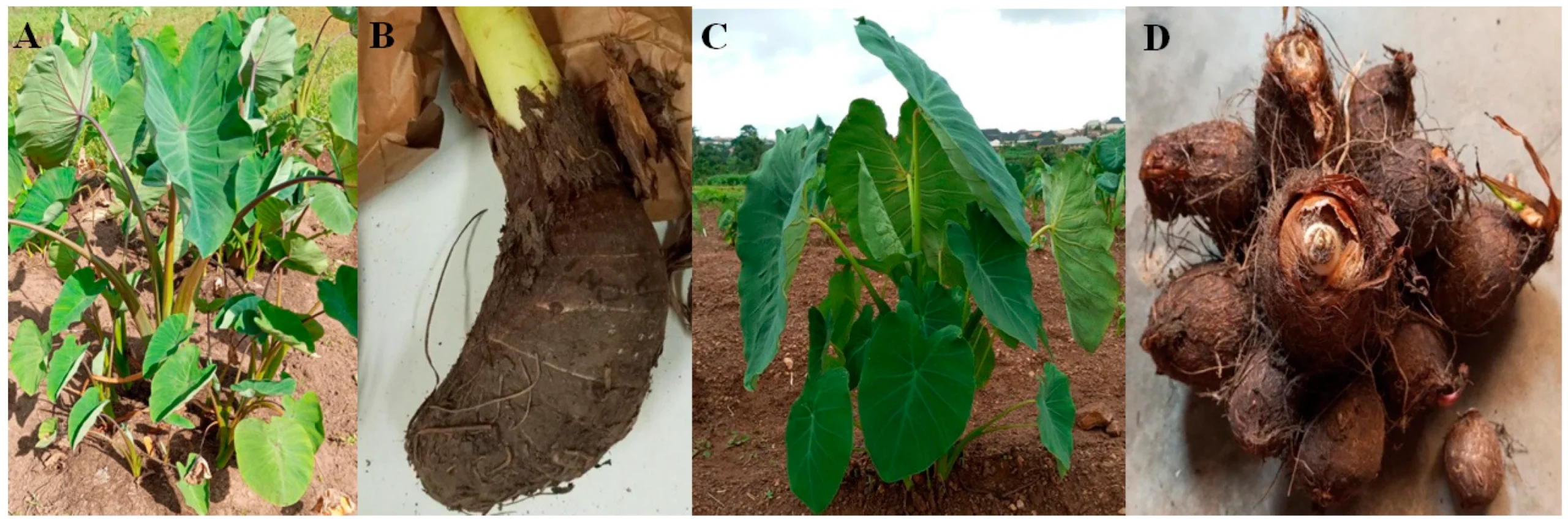
Dasheen and Eddoe taro plants and their underground parts: (A) shows the Dasheen taro plant; (B) shows its underground corm; (C) shows the Eddoe taro plant; (D) shows the Eddoe corm along with its smaller cormels.
The widespread presence of TLB and DsMV shows that these pathogens continue to threaten taro production. Researchers caution that repeatedly using self-sourced planting materials, especially corms from farms or local markets, increases the risk of disease spread between planting seasons.
Because viruses are often undetectable in planting materials, farmers may unknowingly plant infected corms, leading to reduced crop growth and yield. This issue is compounded by reliance on traditional farming practices that have changed little in many communities.
Researchers observed that farmers continuously recycle planting materials from season to season, without introducing improved varieties or clean materials. While this approach uses available resources, it also allows diseases to persist, making effective disease management difficult. This highlights the need for a broader strategy to strengthen the crop production system.
Potential solutions include developing and releasing improved varieties through breeding programs to enhance yield and disease resistance and strengthening seed systems to provide farmers with clean planting materials. Expanding agricultural advisory services can also help farmers adopt better agronomic practices.
The study also found that taro, an orphan crop with no improved varieties in Nigeria, has received limited investment and research attention. This is expected to change with initiatives such as the Vision for Adapted Crops and Soils (VACS), which aims to develop resilient food systems by promoting diverse, nutritious, and climate-adapted crops, such as taro, now considered an “opportunity crop.” These efforts are expected to improve market systems, expand access to financial services, and strengthen farmer cooperatives, thereby increasing the economic viability and long-term sustainability of taro farming in Nigeria.
Contributed by Oloruntomiwa Oluwole, ‘Timilehin Osunde and Lava Kumar


No Comments