
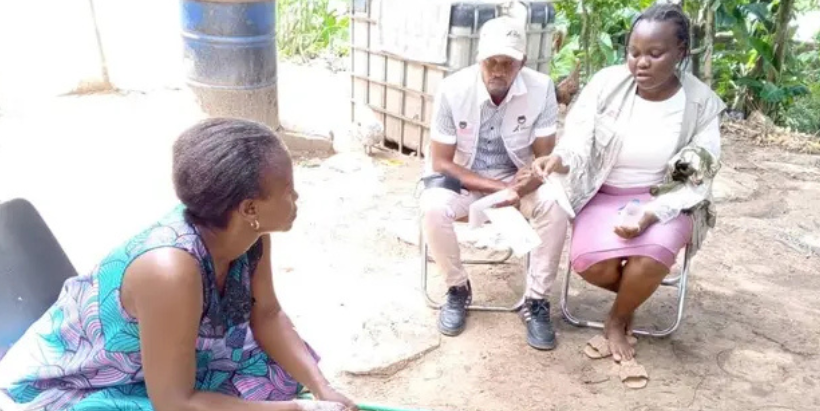
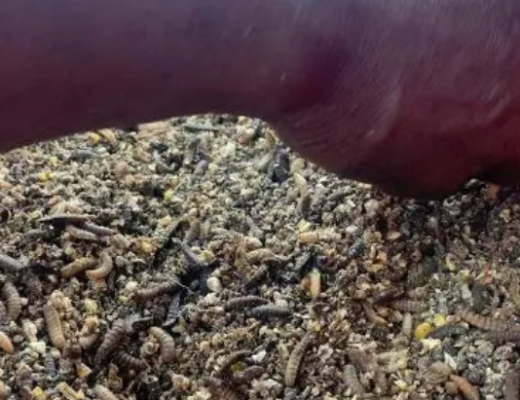
In order to ensure a sustainable supply of household waste for its black soldier fly larvae production unit established at the University of Kinshasa (UNIKIN), the BBEST project in partnership with the latter has undertaken an awareness-raising activity on the collection and sorting of household waste used in the production of feed for poultry, pigs, fish and organic fertilizers.
This activity aimed to raise awareness among households and restaurants about waste collection to meet the growing needs of the black soldier fly larvae production unit. During these three days of door-to-door outreach, agents encouraged households to improve their sorting practices and to enhance the safety of the equipment received from the BBEST project.
On the first day, the agents further clarified the project’s objectives, raised awareness among existing households, including those on the teachers’ plateau who were already partners in waste collection, and addressed the households’ concerns.
On the second day, awareness-raising efforts targeted new households, informal restaurants, and other individuals producing biodegradable waste. The project and its benefits were also explained.
On the third day, the project distributed food to households and restaurants participating in the project; the agents also raised awareness among households about the black soldier fly and the use of its larvae in animal feed. This awareness campaign helped strengthen the commitment of existing households, integrate new participants, and identify operational challenges to be overcome.
To optimize this household awareness activity, households were informed about the use of organic waste and the importance of their participation in this waste collection activity and their willingness to use the bins for waste collection.
1. Did you know that your organic waste can be transformed into a substrate for growing black soldier fly larvae, used in animal production?
Black soldier fly larvae offer numerous advantages in animal feed: – Rich source of protein: They contain high-quality protein, ideal for feeding fish, poultry, and pigs. – Sustainable alternative: They replace ingredients like fishmeal or soybean meal, thus reducing pressure on natural resources. – Cost reduction: Their production is economical and can lower feed costs for farmers. – Positive environmental impact: By consuming organic waste, they reduce greenhouse gas emissions and produce natural fertilizer as a by-product.
2. Why participate in this initiative?
By participating in this campaign and sorting your household waste, you bring many benefits, both to yourself and to the community.
3. Are you willing to use the bins?
Bins are provided to facilitate household waste collection. Sorting waste is a crucial step in this ecological process. By properly separating organic waste from other types of waste, you contribute to the creation of suitable substrates for black soldier fly larvae. This simple action protects the environment while making the most of your waste. What to put in the bins: – Fruit peelings (e.g., oranges, bananas, mangoes). – Vegetable peelings (carrots, tomatoes, cabbage, etc.). – Food scraps such as fufu, rice, or meat. – Any household waste of organic origin.
Do not put the following in the bins: batteries (dangerous for production and the environment), medications (not recyclable in this program), children’s underwear or any other non-organic waste, and any industrial or toxic waste.


No Comments