
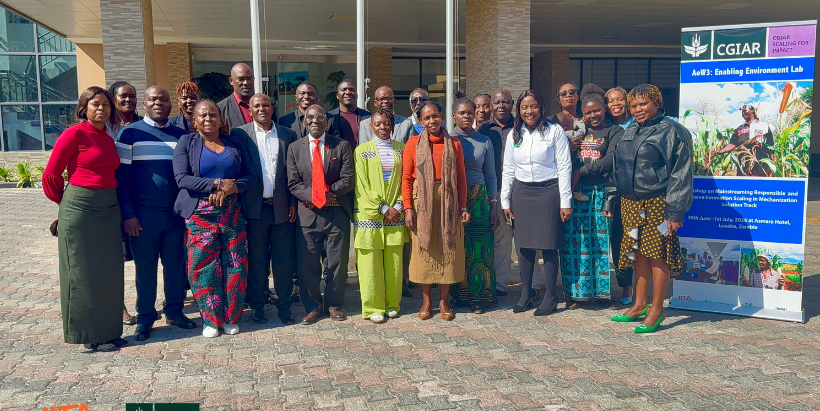
The GESI workshop brought together stakeholders from research, government, the private sector, development partners and other institutions to explore how agricultural mechanization can be scaled in ways that are equitable and inclusive.
Scaling agricultural mechanization innovations has enormous potential to transform Zambia’s food, land, and water systems by improving productivity, reducing labor demands, minimizing post-harvest losses, and creating new business opportunities across agricultural value chains. However, successful mechanization scaling is not simply about increasing the number of machines in rural communities. Rather, it is a question of who benefits and who is left behind. Without deliberate efforts to promote inclusive mechanization innovation, scaling approaches can reinforce existing inequalities by excluding women, youth, and marginalized groups, who often face barriers to accessing technologies and compounding enabling-environment challenges (finance, market systems, gender equality and social inclusion, policy, and regulatory).
To address some of these issues, CGIAR Scaling for Impact Science Program gender researchers, IITA Associate Gender and Social Inclusion Research Scientist, Dr Millicent Liani, and Dr Ojongetakah Enokenwa Baa, Gender, Social Inclusion and Youth Researcher at International Water Management Institute (IWMI), convened a two-day training workshop in Lusaka from 30 June to 1 July 2026.
The workshop, which later forms part of the CGIAR Scaling for Impact Science Program under the Enabling Environment Lab, brought together research and development partners, government institutions, financial organizations, private-sector actors, farmer organizations, and cooperatives to strengthen capacities for the responsible and inclusive scaling of agricultural mechanization innovations in Zambia. It hence provides technical assistance to the International Maize and Wheat Improvement Center (CIMMYT)-led innovation and its scaling partners in Zambia.
This innovation seeks to strengthen the Scaling of Inclusive Mechanization through Rural Entrepreneurship and Financial Innovation in Zambia. It is co-led by the Alliance of Biodiversity International, CIAT, and IWMI.
Embedding responsible and inclusive scaling in innovation adoption: Practical insights using GenderUp
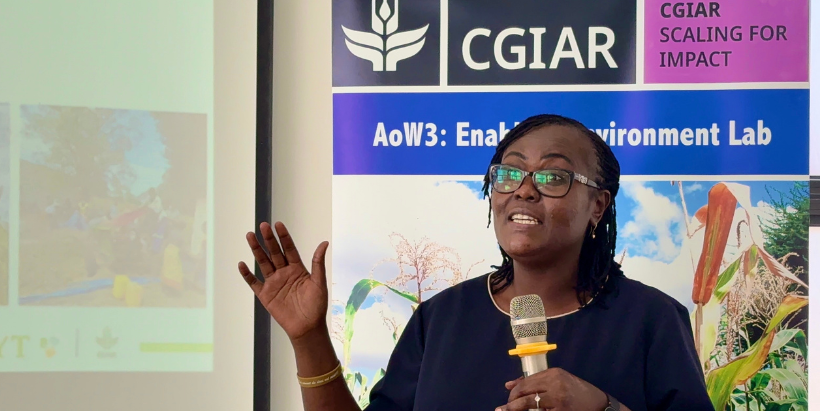
Dr Liani opens the workshop, highlighting the importance of integrating gender equality and social inclusion into agricultural mechanization to ensure that innovation benefits everyone.
A central feature of the workshop was the introduction of the GenderUp methodology, a practical, discussion-based approach that helps innovation-scaling teams and partners integrate responsible and inclusive practices into scaling agricultural innovations. Unlike conventional scaling approaches that focus primarily on technology adoption, GenderUp enables teams to identify who may be excluded, understand why exclusion occurs, assess the implications of intersecting social identities, develop mitigation strategies, and integrate inclusive actions into project management.
Through interactive group discussions, participants applied the methodology to mechanization innovations, including two-wheel tractors and trailers, maize shellers, multi-crop threshers, groundnut shellers, basin diggers, and peanut butter processing machines. Beyond assessing technical performance, they explored how social dimensions such as wealth, gender, land ownership, age, education, disability, geography, and marital status influence in/equitable access to mechanization technologies and their benefits. The discussions revealed which groups are most at risk of exclusion and the wider social consequences of unequal access.
From critical reflection of social inequalities to action
An important outcome of the workshop was the identification of practical strategies to make mechanization scaling more responsible and inclusive. Participants proposed several actions, including developing gender-responsive financial products for mechanization service providers; designing lighter, more user-friendly equipment for women, elderly farmers, and persons with disabilities; scheduling trainings to accommodate women’s workloads and caregiving responsibilities; and promoting women and youth role models in mechanization businesses.
Other proposals included strengthening mentorship programs and entrepreneurship support for youth mechanization service providers; expanding partnerships with disability organizations to improve accessibility and inclusion; and improving access to markets, finance, and technical support through cooperatives and mechanization service provider networks. Participants also emphasized that mechanization should be promoted as part of a broader innovation package that includes access to finance, extension services, quality inputs, market linkages, and enabling policies.
Responsible mechanization innovations scaling for equity and impact
Speaking during the workshop, Dr Liani, explained that the training was designed to ensure that mechanization contributes to inclusive agricultural development rather than reinforcing existing inequalities. She said, “IITA is providing technical support to CIMMYT-led mechanization initiatives in Zambia. Through this process, we have identified areas where mechanization innovations could unintentionally exclude certain social groups. This training is helping scaling actors to integrate inclusive approaches at every stage of implementation to ensure that no one is left behind.” Her emphasis was that research institutions play a critical role in ensuring that technological innovations are developed and scaled in ways that respond to the diverse social needs and realities of intended users.
Meanwhile, Dr Enokenwa Baa, highlighted the importance of strengthening mechanization through inclusive service delivery models. She explained that, “As we support mechanization innovations in Zambia, we realized there were important gaps around inclusion that needed to be addressed. One key lesson from this workshop is that cooperatives can work more closely with mechanization service providers not only by accessing machinery as clients, but by integrating these providers into their business structures and creating employment opportunities.” She further noted that embedding inclusion in business models would help ensure that agricultural innovations reach more farmers, strengthen rural enterprises, and transform behavioral outcomes.
One of the workshop participants, Mwangala Mukumbi, Relationship Manager at Panuka Zambia, underscored the need for more deliberate communication and capacity-building strategies to reach excluded communities. She said, “The biggest takeaway for us is that we need to be more deliberate in reaching women, young people, and other marginalized groups. Traditional communication approaches may not always be effective, so we must develop strategies that accommodate different literacy levels and learning needs through both digital and face-to-face engagement.”
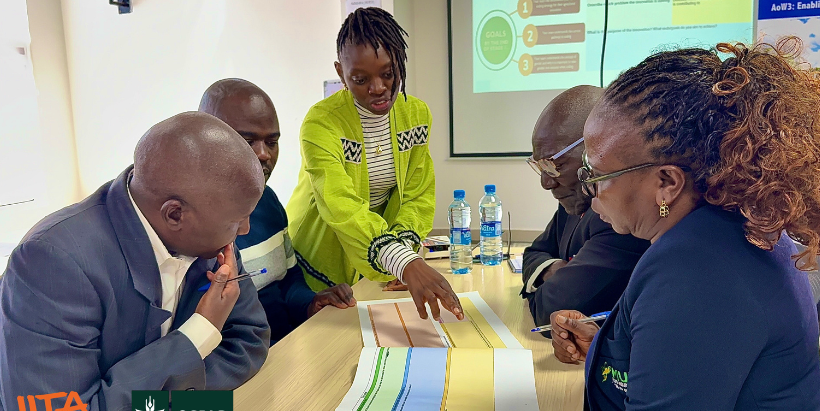
Dr Baa engages with participants in a practical group exercise during the workshop.
From policy to practice
Representing Zambia’s Ministry of Agriculture, Ndhlovu Masauso, the Principal Agricultural Engineer in the Department of Technical Services, emphasized that the country already has a National Agricultural Mechanization Strategy (2024 to 2028). The challenge, he said, lies in translating policy into practical, inclusive implementation. “As we mechanize agriculture, we must recognize that different groups participate in agricultural value chains in different ways. If we fail to embed inclusivity into implementation, we risk leaving some groups behind. The knowledge gained from this workshop will help strengthen how we apply our mechanization strategy on the ground,” he said.
As CIMMYT and its scaling partners work to support up to 1,000 mechanization service providers in Zambia by 2030, success will depend not only on scaling technologies that improve productivity and efficiency but also on scaling approaches that ensure equitable access to and benefits for all social groups. Ultimately, responsible and inclusive scaling is not an optional add-on; it is essential for ensuring that agricultural transformation delivers opportunities for everyone. Through science, strategic partnerships, and evidence-based approaches, CGIAR and its partners remain committed to scaling mechanization solutions that improve productivity while creating inclusive pathways for participation and shared prosperity.
Contributed by Rachel Namukolo-Nali, Millicent Liani, and Ojongetakah Enokenwa Baa


No Comments