
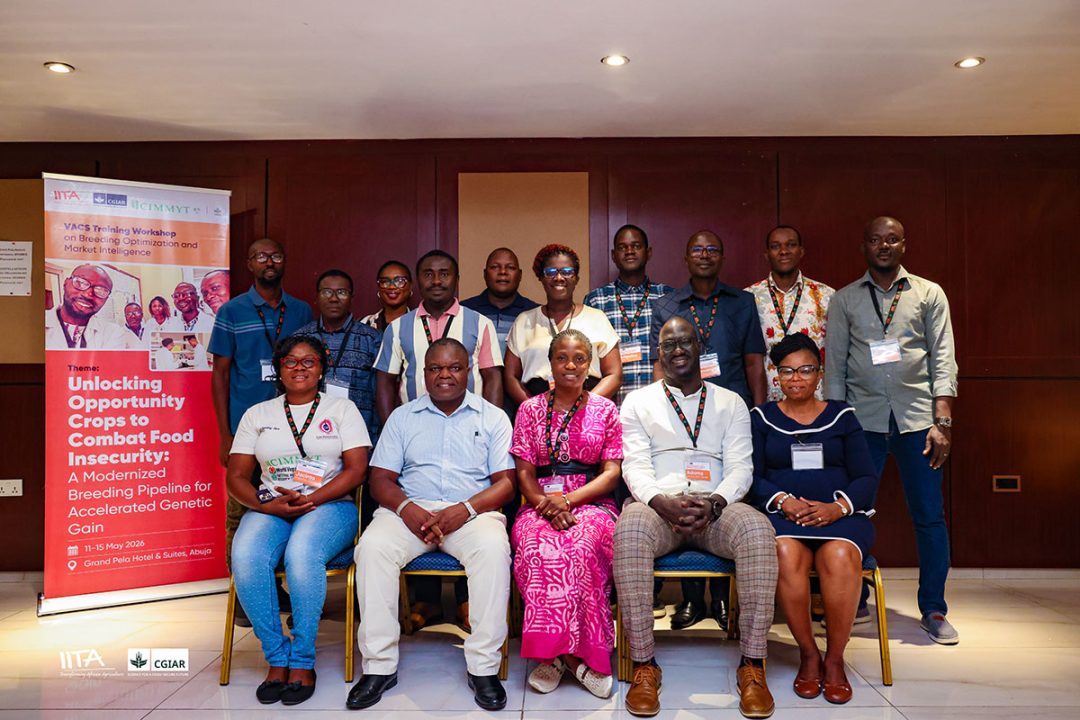
IITA, in collaboration with CIMMYT and other CGIAR centers, brought together breeders from across Africa for a five-day intensive training on breeding pipeline optimization and market intelligence, to accelerate genetic gain in the continent’s neglected yet highly nutritious “opportunity crops.”
VACS fellows and facilitators pose for a group photograph
From Bambara groundnut cultivated in the savannahs of Ghana to Okra harvested in the humid forests of Nigeria, from Sesame fields in the Sahel to Taro fields across West Africa, Africa’s “opportunity crops” feed millions, nourish bodies, and preserve cultural heritage. However, despite their nutritional value and resilience to climate stress, these crops have long suffered from limited investment in research and breeding efforts. This propelled a new generation of African breeders determined to change this narrative. Thus, from 11 to 15 May 2026, 14 of them convened at the Grand Pela Hotel & Suites in Abuja for an intensive training program designed to strengthen the tools and strategies needed to modernize breeding programs for Africa’s under-researched “opportunity crops.”
The International Institute of Tropical Agriculture (IITA), in partnership with other CGIAR centers, including the International Maize and Wheat Improvement Center (CIMMYT), and the Vision for Adapted Crops and Soils (VACS), to administer the training workshop on breeding optimization and market intelligence, ensuring an intensive deep-dive into the theme, “Unlocking opportunity crops to combat food insecurity: A modernized breeding pipeline for accelerating genetic gain.”
The cohort, drawn from six countries, comprised researchers from National Agricultural Research Systems (NARS), universities, and CGIAR centers. This represented a diverse mix of expertise and institutions, with professionals who have worked across priority VACS crops, including Bambara groundnut, sesame, amaranth, okra, taro, finger millet, and pigeon pea. The week-long training was led by four principal facilitators and supported by a broader team of IITA experts, who guided participants through sessions on breeding pipeline optimization, data-driven decision-making, and market intelligence for crop improvement.
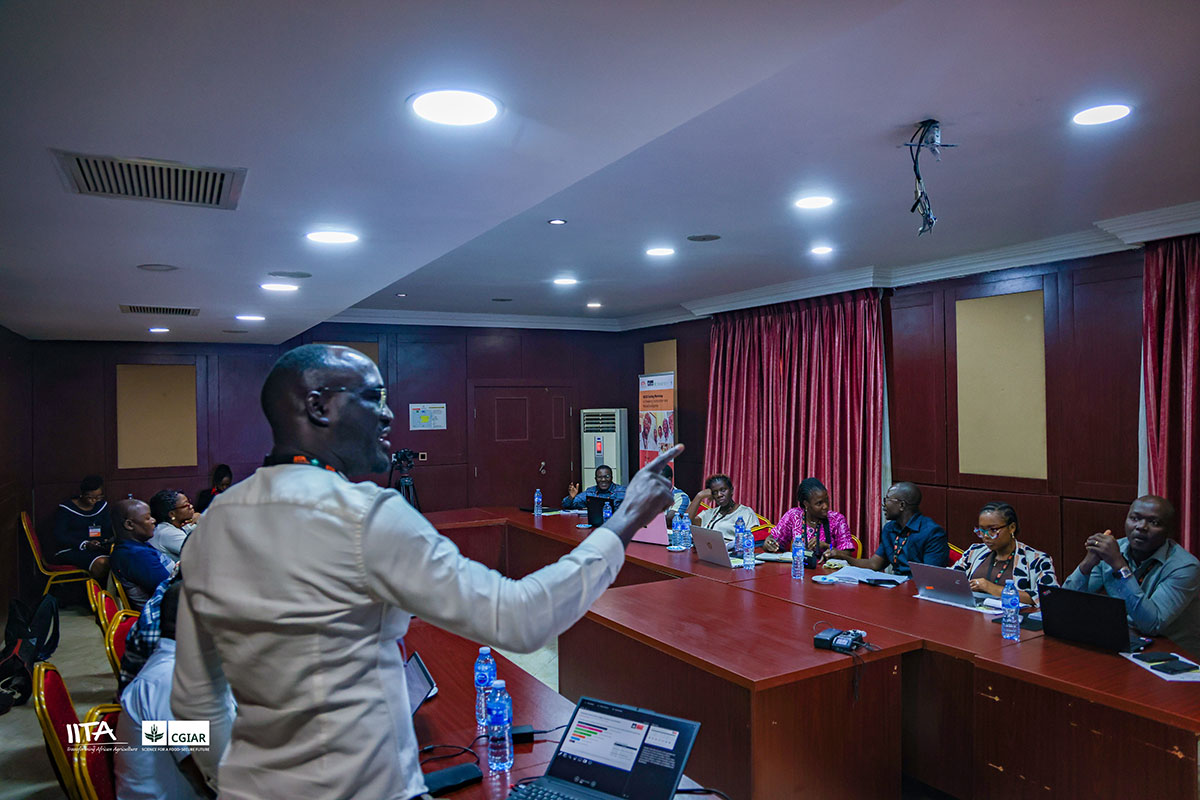
Facilitator explaining the breeding pipeline
A pipeline thinking shift from traits to markets
Opening the workshop, Dr Ranjana Bhattacharjee set the tone with a simple, yet transformative principle: “breeding should never happen in isolation.” She emphasized that for scientific advances to translate into varieties that farmers genuinely adopt, breeders must begin with the end user in mind, including farmers, processors, consumers, and seed companies. She also urged participants to view themselves as Trainers of Trainees (ToT) who would carry these methods back to their home programs and multiply the workshop’s impact many times over. “This market-oriented, end-user-driven perspective is an integral component of modern breeding programs,” she explained.
Day 1: Market intelligence, market segments, and Target Product Profiles (TPPs)
Agnes Gitonga and Mercy Mbugua from CIMMYT guided participants through the principles of market-driven breeding, emphasizing the importance of aligning breeding priorities with market needs and end-user preferences. Their sessions explored how to identify market opportunities, define market segments using the eight-criterion CGIAR framework, including crop type, material type, sub-region, production environment, maturity group, and end-user requirements, and translate these insights into Target Product Profiles (TPPs), which serve as detailed blueprints for the development of improved varieties. Using Bambara groundnut as a practical case study, participants learned how multidisciplinary product design teams develop TPPs that define both minimum and ideal trait thresholds. These included key attributes, such as grain yield, drought tolerance, maturity period, processing quality, and other farmer- and market-preferred characteristics.
Dr Tunrayo Alabi from IITA later introduced the Target Population of Environments (TPE) layer 1, focusing on the biophysical and socio-economic characterization. Drawing on GIS tools and long-term climate data, the session demonstrated how breeders can identify the environments where new varieties are expected to perform optimally. The day concluded with a session by Dr Adama Seye from CIMMYT, who illustrated how TPPs and TPEs are translated into measurable breeding objectives and clearly defined selection criteria. He emphasized the importance of establishing a logical continuum that connects market demand to breeding decisions, stage-gate processes, and evidence-based variety advancement.
Day 2: Enhancing the rate of genetic gain: Breeding foundations and germplasm development
Dr Seye guided fellows through the breeder’s equation, not merely as a formula to memorize, but as a practical decision framework. Participants learned that every breeding intervention must be evaluated against four levers, including selection intensity, selection accuracy, useful genetic variance, and cycle length. Each of these levers represents its own trade-offs in cost, diversity, and risk.
Sessions on founder selection and harnessing diversity encouraged participants to look beyond the elite pools and explore the values of landraces and gene bank resources. A subsequent module on Trait Discovery and Deployment (TD&D) introduced a six-step stage-gate process, ranging from trait scoping and locus identification through to product introduction; embedding new traits into breeding programs in a disciplined, evidence-based way.
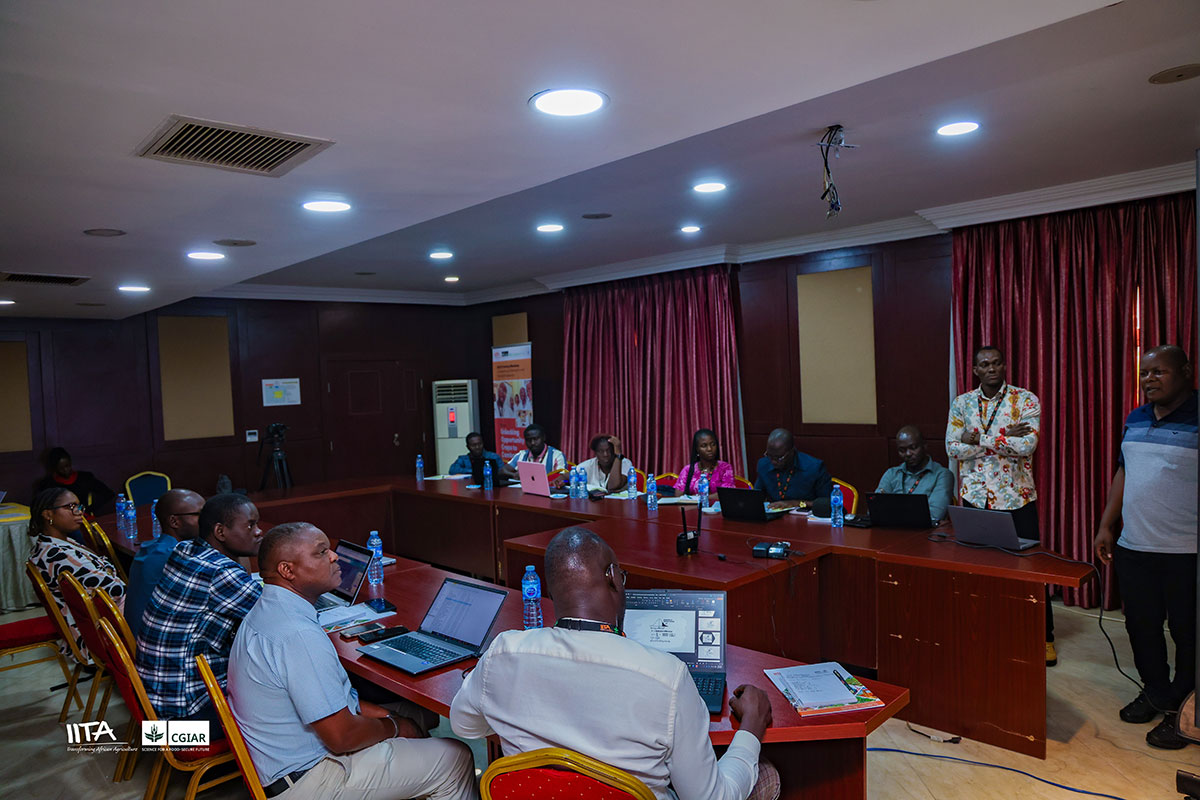
Participants engage with a session on common pipeline logic
Day 3: Trial networks and phenotyping
Fellows examined the architecture of breeding schemes for self-pollinated and clonal crops, tracing the pathway from an initial pool of 30 parents to a single released product through stages of crossing, early screening, PYT, AYT, MET, and on-farm validation. Sessions on experimental design (RCBD, alpha-lattice, augmented, p-rep, and row-column) together with TPE layer 2 envirotyping, phenotyping SOPs, and check strategies reinforced a central principle: the design of a trial network is the design of genetic gain itself.
During the afternoon group work sessions, each crop team developed a draft trial network design tailored to their respective breeding programs.
Day 4: Data, decisions, and discipline
The week’s most analytical day opened with QA/QC and the concept of a data trust chain; the discipline of asking, at every step, whether a trial can be trusted sufficiently to support sound breeding decisions. Fellows worked through key concepts, including variance components, heritability interpretation, BLUEs versus BLUPs, selection indices, and trait trade-offs. The session reinforced that BLUPs are not magic corrections; they are only as good as the design, metadata, phenotyping, and model behind them, which was an important lesson from the session.
The day closed with a conceptual and practical introduction to genomic selection, highlighting its growing role in accelerating genetic gain within modern breeding programs.
Day 5: Optimization and decision framework
The final day pulled together the week’s lessons into a comprehensive program-level optimization framework. Sessions focused on crossing strategies that entail applying optimal contribution selection and genomic performance cross-prediction. Emphasis was also placed on using a structured framework for product development, including stage-gate systems and product advancement and planning meetings that are subject to real-world budget, land, and labor constraints. Group presentations provided each crop team with the opportunity to present and defend the breeding schemes they had developed throughout the week.
“Data is the currency,” Dr Seye reminded the cohort, urging participants to invest in germplasm, processes, and people, while embracing a philosophy of continuous improvement that consistently asks of every breeding initiative: What worked well? What did not? And what can be done differently?
Delivering the closing remarks, IITA’s Dr Hapson Mushoriwa challenged fellows to take the week’s lessons home and translate them into action. “Data is the currency,” he reiterated to the cohort, emphasizing that progress can only be made with quality data. He further noted that “collaboration, continuous learning, and effective communication among breeders, researchers, and partner institutions will remain critical to achieving sustainable impact and maximizing the value of partners’ collective efforts.”
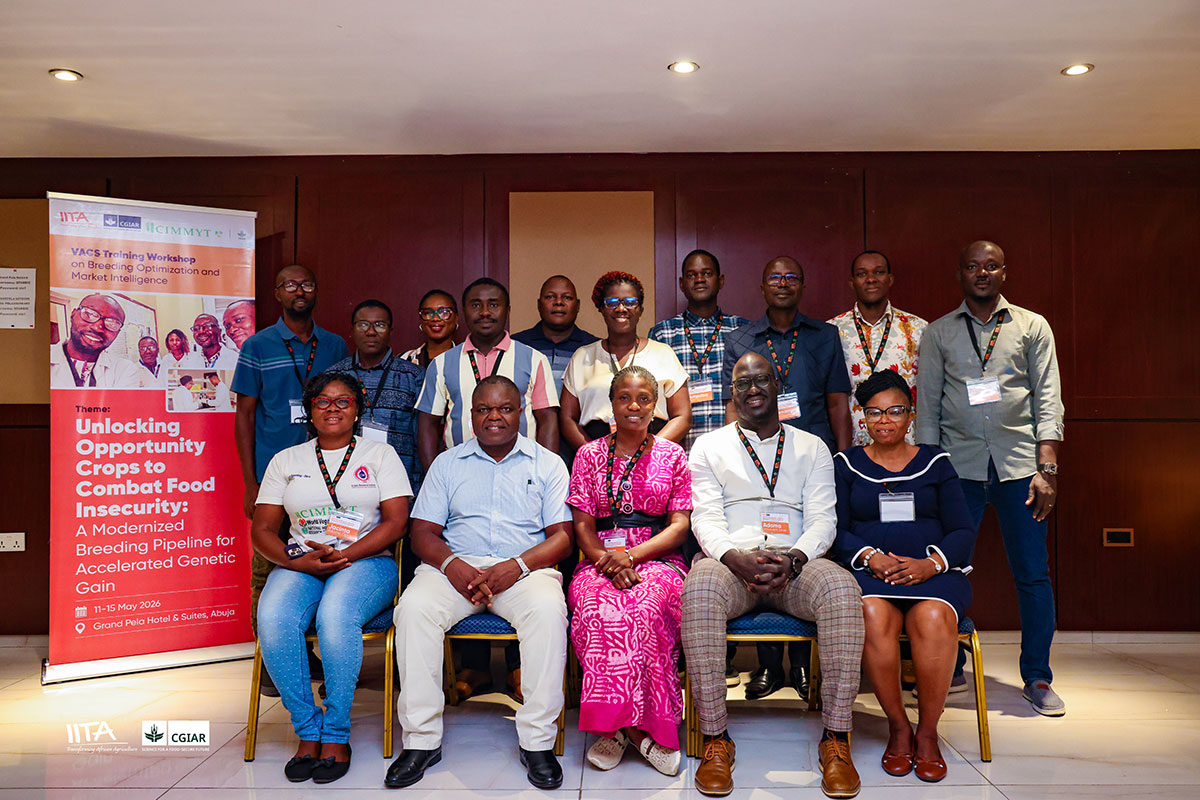
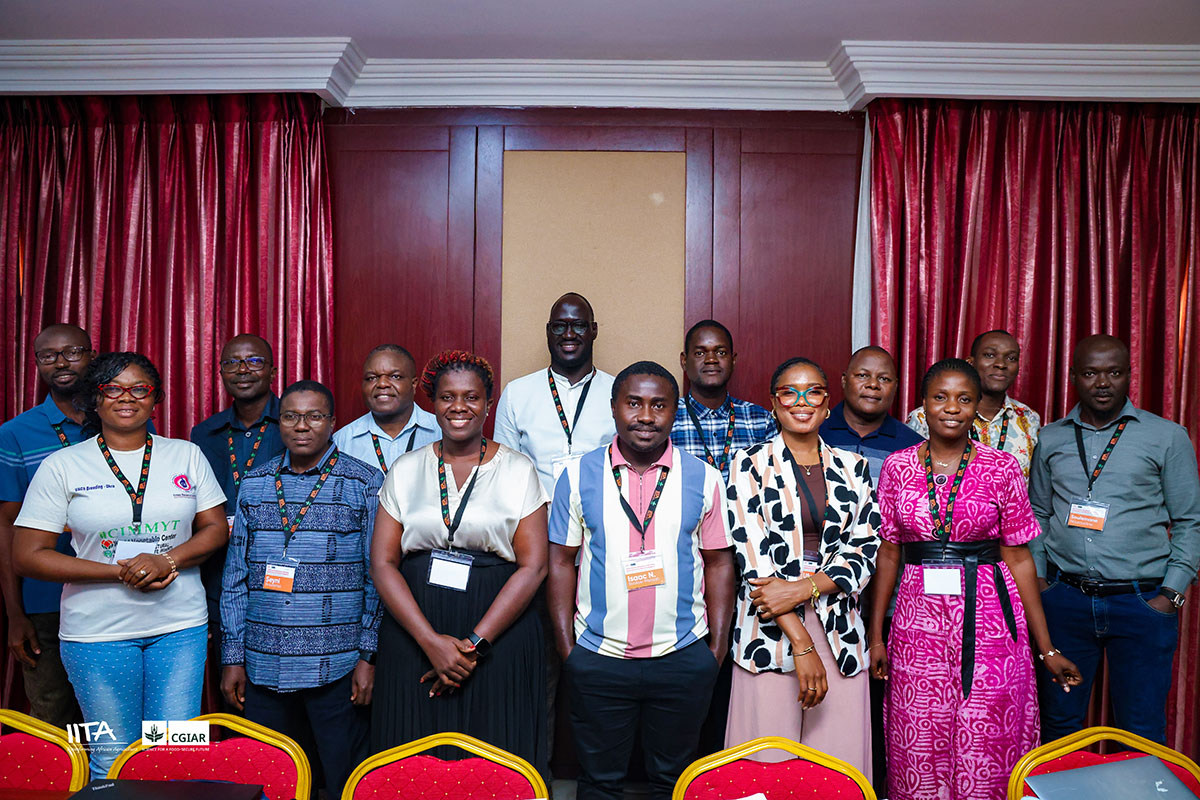
VACS fellows and facilitators in a group photo
From training to transformation
For VACS fellows, the workshop translates vision into practice. Each fellow returned home with a draft TPP, a preliminary trial network design, a clearer understanding of the breeder’s equation, and a network of peers across six countries with whom to test and refine their ideas. The crops they breed have been undervalued for too long, but with the knowledge they have acquired, they are now prepared to make a difference and impact the livelihoods of smallholders and consumers.
Contributed by
Hapson Mushoriwa
Ranjana Bhattacharjee
Adama Seye
Dean Muungani
Mercy Wanjiru
Agnes Wambui


No Comments