
Building a functional formal cassava seed system is critical to Tanzania’s agriculture. It is the foundation for providing high-yielding, disease-resistant, and climate-resilient cassava varieties to smallholder farmers. Yet the very people who form the backbone of cassava production, women and youth, are systematically excluded as the seed sector grows and commercializes.
A 2023 participatory study found that women and youth face structural and systemic barriers to becoming cassava seed entrepreneurs (CSEs), including limited access to land, financing, and decision-making power. The root causes of these barriers run deep, with male dominance, social norms, customary land inheritance system, norms around seed sharing, and limited awareness of human and land rights all playing a role.
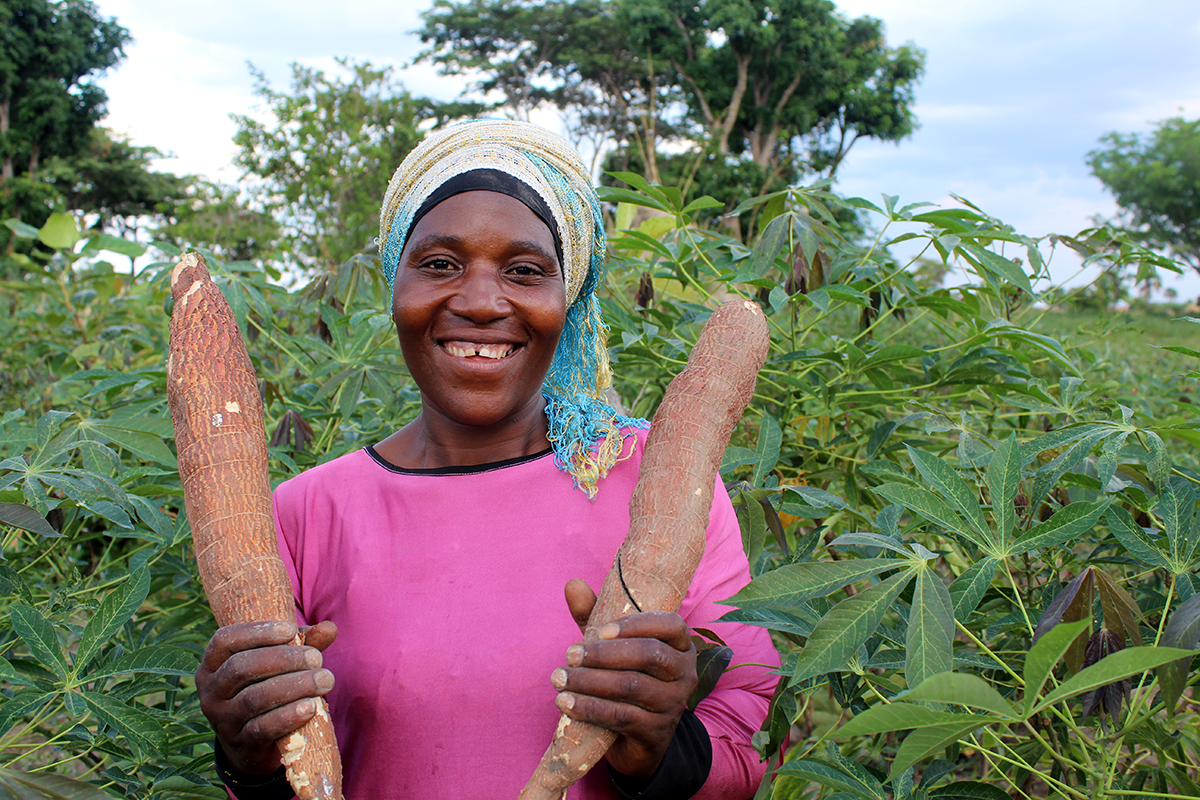
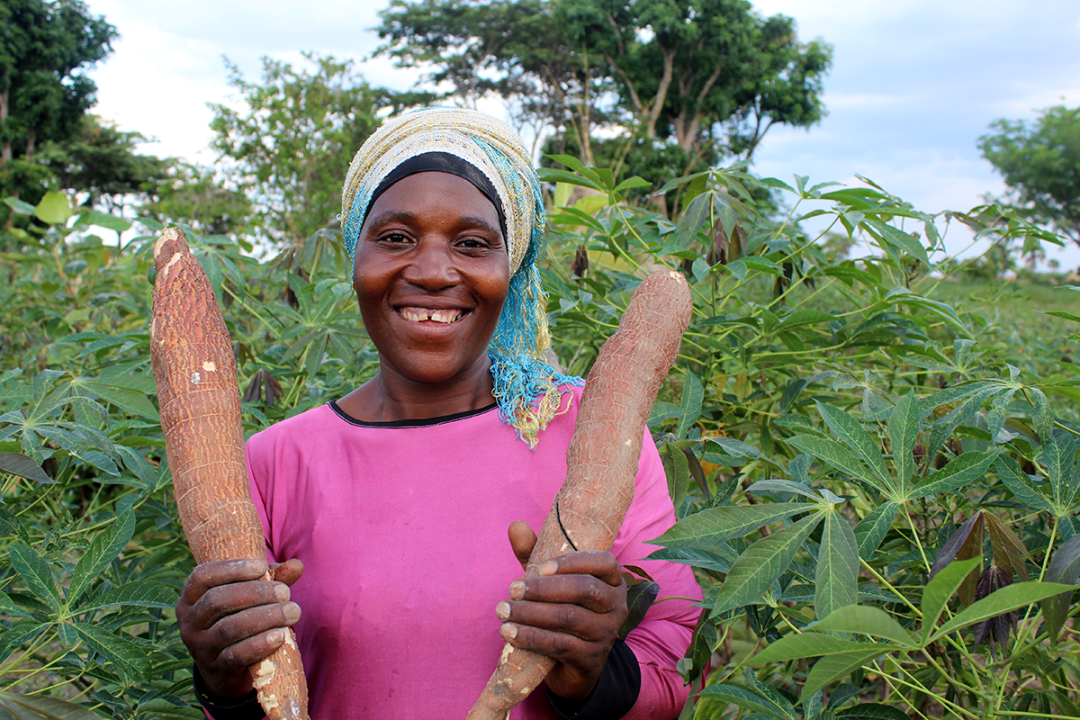
Saada Mkuyu, a cassava seed entrepreneur holding cassava roots in her cassava seed farm. (Photo credit: Gloriana Ndibalema)
From 14–16 May 2026, IITA–CGIAR, under the Muhogo Bora (Better Cassava for All) Project, hosted a co-design workshop in Dar es Salaam, bringing together sixteen participants from Tanzania Agricultural Research Institute (TARI), Cornell University, Legal Services Facility Tanzania (LSF), and Urambo Legal Availment and Charity (ULAC) to co-develop practical guidelines for implementing and measuring gender-transformative change within the commercialized cassava seed entrepreneurship ecosystem in Western and Central Tanzania.
The project Principal Investigators, Prof. Hale Ann Tufan and Prof. Chiedozie Egesi, opened the workshop, stressing the importance of strengthening the CSE ecosystem by creating an enabling environment where women and youth entrepreneurs can thrive, not just survive.
The workshop opened with technical presentations from project teams covering cassava seed classes, seed system, and delivery model in Tanzania, highlighting key achievements, challenges, and lessons learned. This was followed by an overview of the project’s progress on Gender Equality and Social Inclusion (GESI) work. The CGIAR Gender Equality and Inclusion IITA team delivered a presentation titled “Designing and implementing Gender Transformative Interventions (GTIs) in cassava agrifood systems in Tanzania,” led by Olajumoke Adeyeye. An introduction to Gender Transformative Approaches (GTAs) in agricultural research was also delivered to deepen participants’ shared understanding.
“Most GESI work in cassava seed systems focuses on treating symptoms — diagnosing gender and social inequalities to improve access and participation. This delivers short-term gains but does not address the root causes.” Dr Millicent Liani, Muhogo Bora GESI Lead at IITA, explained, “Muhogo Bora is different. We question, challenge, and address the structural and systemic roots of inequality in the cassava seed ecosystem (CSE), working toward lasting, sustainable outcomes for women, youth, and marginalized groups.”
Liani noted that this workshop was about bringing together CSEs and community leaders’ own proposed solutions for social change, by developing practical guidelines for implementing gender-transformative interventions (GTIs) in Tanzania’s CSE ecosystem.
Participants were guided through transformative action plans devised by CSEs and community leaders from the 2023 research, enabling them to identify and agree on key priority interventions for implementation. The key intervention priorities identified included: shifting social and gender norms, building women’s and youth agency, addressing gender-based violence, and securing land and resource rights through innovative and collaborative action.
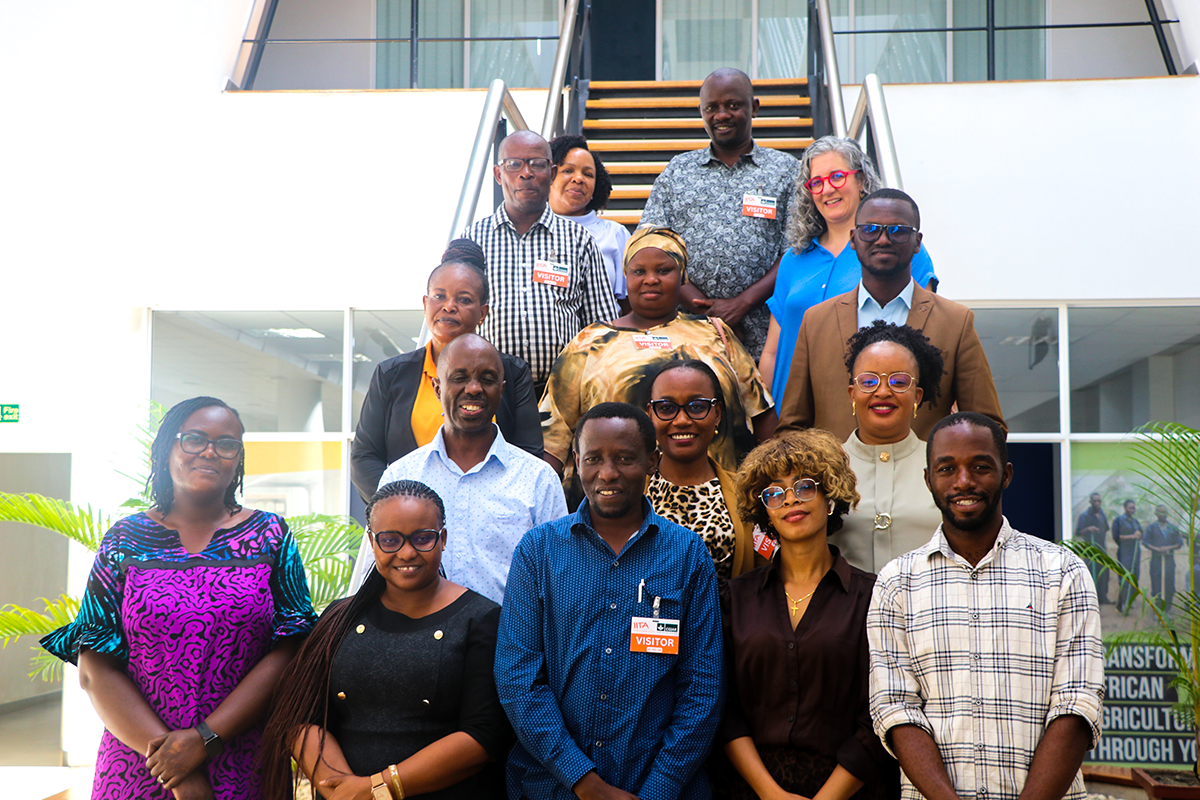
Participants in a group photo during the co-design workshop in Dar es Salaam. (Photo credit: Gloriana Ndibalema)
Thereafter, participants mapped the dimensions and spheres of gender-transformative change, devised intervention strategies, and identified target groups and engagement approaches, building on the existing LSF community-based paralegal implementation model. Key transformative methodologies identified included community conversations and dialogues; engaging men, boys, and local leaders as allies of social transformation; and the Gender Action Learning System (GALS) at household and community levels.
Participants then co-created tailored intervention packages. A gender-transformative Theory of Change and impact pathways were developed, and participants agreed to continue working virtually to co-develop gender-transformative indicators and action-research learning questions. Implementation of the GTIs is set to commence in August 2026.
Acknowledgements
LSF brings deep experience in legal empowerment across Tanzania’s 184 districts, each with its own paralegal organization. ULAC, one of those 184, is active in all 20 wards of Urambo District, the Muhogo Bora pilot site. They provide free paralegal services and community outreach on human rights, land rights, inheritance, and gender-based violence through schools, village and ward meetings, local radio, village savings and lending groups, and religious institutions. Muhogo Bora’s partnership with LSF and ULAC intentionally leverages these existing networks to support gender-transformative interventions for women and youth-led cassava seed enterprises.
Contributed by Fortunatha Mollel, Ally Ng’adoa, and Gloriana Ndibalema


No Comments