
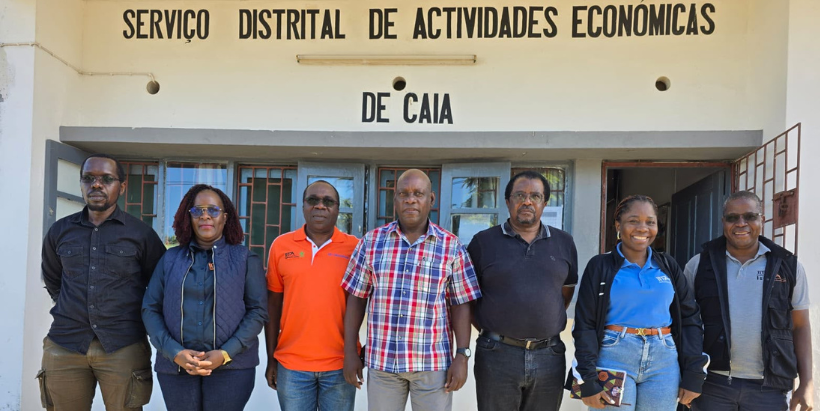
From left: Dr John Omondi, Gersonia Catine, Dr Steve Boahen, Districtal Service of Economic Activities Director, Dr David Chikoye, Matina Neves and Dr Amaral Chibeba in a courtesy visit to the local Government
As part of efforts to reaffirm IITA–CGIAR‘s commitment to strengthen resilient agricultural systems and transform rural livelihoods in Mozambique through climate-smart agriculture, strategic partnerships, and resilient farming systems, IITA Southern Africa Hub Director, Dr David Chikoye visited the Sofala Water, Energy and Food Security (SWEF II) Project in Caia.
Dr Chikoye, accompanied by the IITA Mozambique delegation, including the outgoing Country Representative, Dr Steve Boahen; the new Country Representative, Dr John Omondi; the National Administrator, Gersónia Catine; the Project Coordinator, Dr Amaral Chibeba; the Accounting Officer, Matina Neves; and project technicians, visited the SWEF II Project in Caia District, Sofala Province, to assess the progress, engage with partners and farming communities, and officially introduce IITA Mozambique’s new Country Representative.
Building Partnerships for Agricultural Transformation
The visit began with a courtesy meeting with the District Directorate of Economic Activities in Caia, one of IITA’s key government partners. During discussions, district officials highlighted Caia’s considerable agricultural potential, driven by crops such as maize, sesame, cowpea, and vegetables, which serve more than 205,000 people living there.
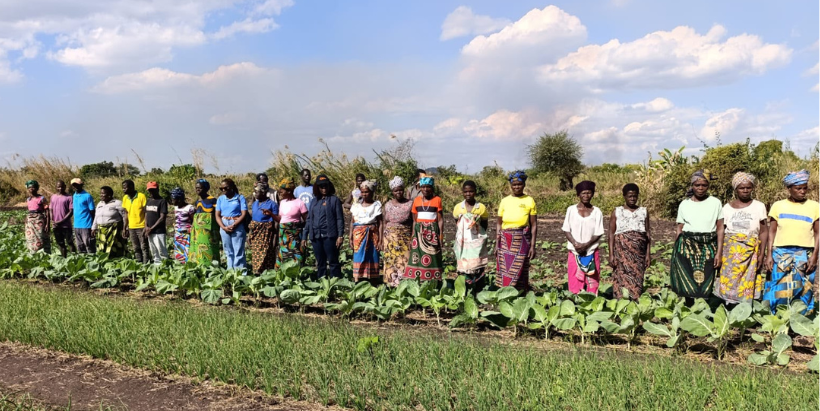
25 de Setembro Association during the IITA Visit.
Government representatives also acknowledged the significant contribution of the first phase of the SWEF Project (2020–2024), particularly in supporting communities recovering from cyclones by promoting climate-smart agriculture and restoring livelihoods. Among the most appreciated interventions was the distribution of improved poultry breeds, which strengthened household nutrition, generated income, and improved resilience among vulnerable families.
Farmers Demonstrate the Power of Climate-Smart Agriculture
The delegation visited farmer associations supported by the SWEF Project, where beneficiaries shared first-hand experiences of how improved agricultural technologies are transforming production and livelihoods. Members of vegetable producer groups reported substantial improvements in the production of kale, lettuce, and sweet peppers, while livestock farmers highlighted enhanced animal production and management practices. One notable example is the “25 de Setembro” Vegetable Farmers’ Association, comprising 16 members, including seven women.
Since partnering with IITA-CGIAR in 2022, the association has increased its income sufficiently to purchase an irrigation water pump—an investment that has expanded vegetable production, improved water access during dry periods, and strengthened the group’s long-term resilience.
Their success demonstrates how targeted investments in climate-smart technologies can enable smallholder farmers to move beyond subsistence production towards more profitable and sustainable farming enterprises.
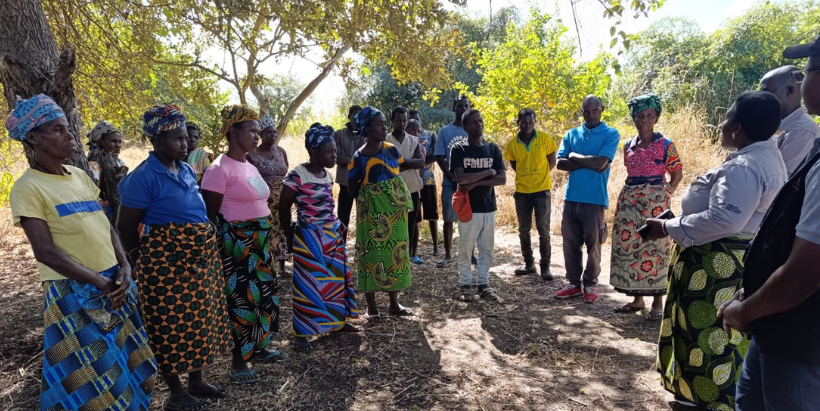
Farm association receiving production orientation from SWEFF project technician.
Scaling Solutions for Greater Impact
During interactions with farmers and project staff, Dr Chikoye reaffirmed IITA-CGIAR’s commitment to delivering practical research and innovations that respond to farmers’ needs.
He encouraged the SWEF II team to strengthen efforts in reducing post-harvest losses through improved preservation and storage technologies while expanding farmer training in agribusiness, market-oriented production, and enterprise development. These interventions will help farming households increase the value of their produce, access profitable markets, and build more resilient livelihoods.
The visit also marked an important leadership transition as stakeholders welcomed Dr John O. Omondi as the new IITA Country Representative for Mozambique while expressing appreciation to Dr Steve Boahen for nearly two decades of dedicated leadership and service to agricultural development in the country.
SWEF II: Advancing Climate Resilience in Caia
The Sofala Province Water, Energy, and Food Security (SWEF) Project–Follow-up Phase (December 2025 – November 2028) is implemented by IITA-CGIAR in partnership with Kyeema (livestock) and is funded by the Austrian Development Agency (ADA). The project shifts from the multi-district approach of the initial phase to a highly localized framework concentrated exclusively in the Caia District, Sofala Province, Mozambique, to maximize resource efficiency and climate resilience. The initiative focuses on scaling up the cultivation of high-yielding, resilient crop varieties and promoting Climate-Smart Agriculture (CSA) and other technologies that boost production and productivity.
During this phase, communities have already benefited from seeds for essential crops—such as tomatoes, cabbage, lettuce, carrots, onions, cucumbers, and peppers—as well as watering cans, rakes, knapsack sprayers, pesticides, and other materials required for pest and disease management.
Suggested photo: Distribution of agricultural inputs to beneficiary farmers.
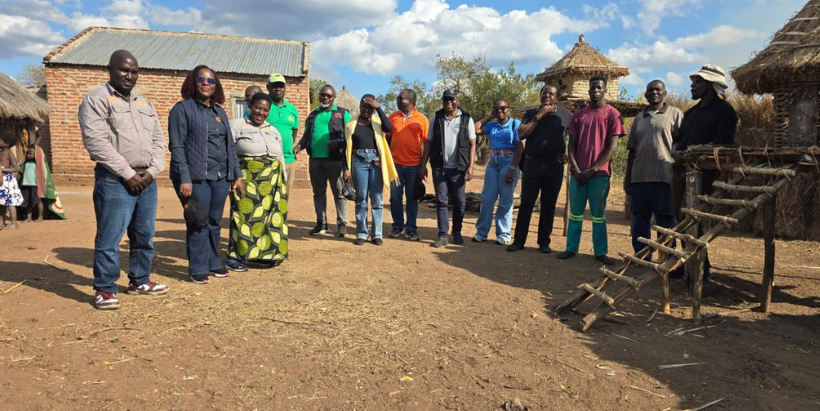
The new project includes a livestock component to support farmers in income generation and nutrition improvement.
Driving Sustainable Agricultural Transformation
The visit underscored IITA-CGIAR’s commitment to working alongside government, development partners, and farming communities to accelerate agricultural transformation in Mozambique. By investing in climate-smart technologies, strengthening local institutions, and empowering farmers with practical innovations, the Institute continues to contribute to resilient food systems, improved incomes, and sustainable rural development.
As SWEF II progresses, IITA-CGIAR remains committed to translating research into impact—supporting farmers in producing more, earning more, and building resilience in the face of climate change.
Contributed by Safira Chirindza


No Comments