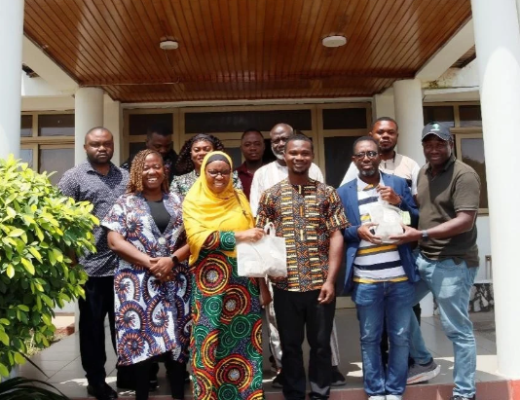
As part of efforts to support the availability of quality planting material for farmers ahead of the 2027 production season, IITA donated breeder seeds of two improved yam varieties to seed producers and national research institutions in Ghana recently. …
Web Team
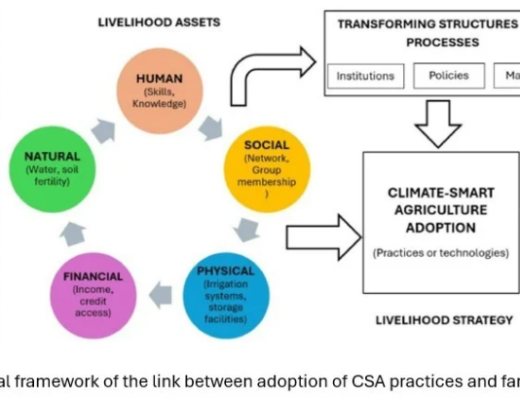
Climate-smart agriculture (CSA) practices could play an important role in strengthening food security and improving the nutritional quality of diets among smallholder farming households in Mali, according to a new study by researchers from IITA and the Institut d’Economie…
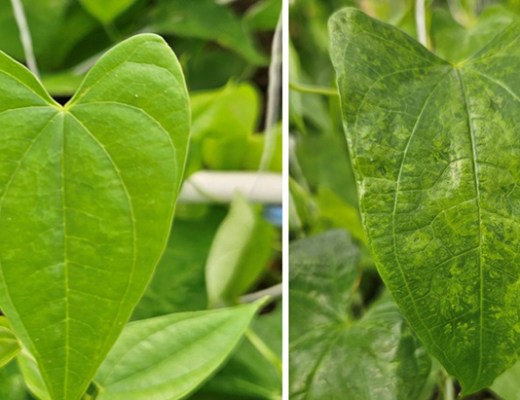
New genomic evidence could help scientists distinguish ancient viral remnants from active infections—and support safer yam germplasm exchange Yams are prone to several viruses, and some of their genomes contain diverse viruses known as endogenous pararetroviral sequences (EPRVs),…
Unlocking women’s land rights in cassava agrifood system through legal aid: Transformative pathways from Stand for Her Land Tanzania Symposium
For over 70 percent of rural women in Tanzania, land is more than an agriculturally productive asset. It is the foundation for livelihoods, household food and nutrition security, economic empowerment, dignity, voice, and decision-making. Yet, despite legal protections,…
The challenge: Economic vulnerability Malawi currently stands as the world’s most tobacco-dependent economy, with the crop accounting for nearly 70% of its foreign exchange earnings. This narrow reliance has left the nation vulnerable to global market shifts, a…
Healthy soils, stronger food systems: How science is powering Sierra Leone’s ‘Feed Salone’ agenda
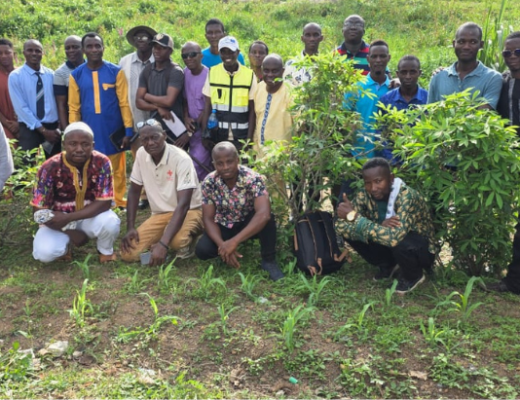
For decades, farmers, researchers, and policymakers in Sierra Leone have worked with limited and outdated soil information, making it difficult to determine where crops perform best, what nutrients are needed, and how fertilizer/other input investments can deliver the…
When citizen science strengthens breeding: Award-winning research provides new evidence of tricot’s social impact
When farmers participate in crop breeding as citizen scientists, their knowledge and experience can shape which varieties are advanced and released. But participation can also strengthen farmers’ own knowledge, agency and leadership—capacities that can, in turn, make breeding…
Mainstreaming responsible and inclusive approaches in scaling agricultural mechanization innovations in Zambia
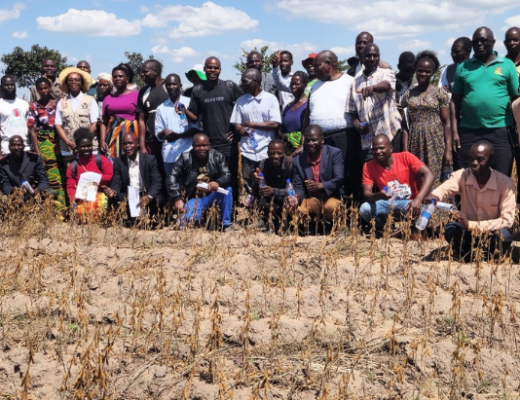
Scaling agricultural mechanization innovations has enormous potential to transform Zambia’s food, land, and water systems by improving productivity, reducing labor demands, minimizing post-harvest losses, and creating new business opportunities across agricultural value chains. However, successful mechanization scaling is…