
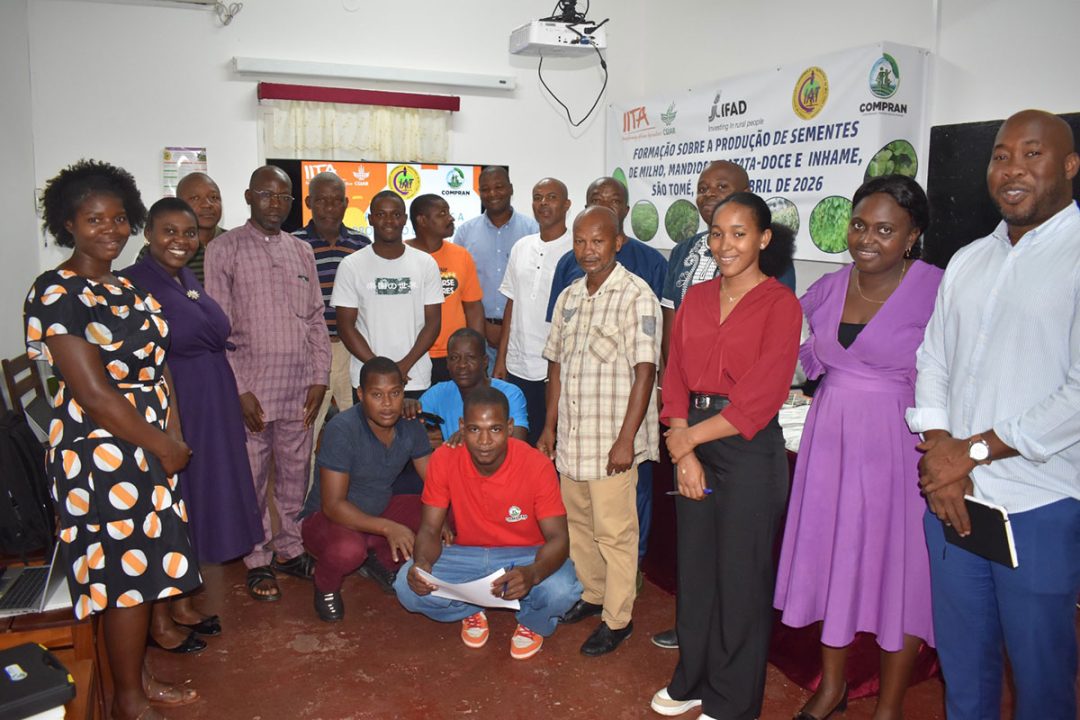
Strengthening climate resilience and agricultural transformation through TAAT technologies and ZAMWIS integration
The IITA–CGIAR, in collaboration with the Zambezi Watercourse Commission (ZAMCOM) successfully facilitated national validation workshops in Mozambique and Zambia under the Programme for Integrated Development and Adaptation to Climate Change in the Zambezi River Basin (PIDACC Zambezi). The workshops focused on validating, prioritizing, and integrating climate-smart agricultural technologies from the TAAT agricultural technology e-catalog into the Zambezi Water Information System (ZAMWIS).
Held in Tete, Mozambique (21 May 2026) and Lusaka, Zambia (26 May 2026), the workshops brought together senior government officials, researchers, extension experts, project implementation teams, development partners, and technical specialists to review technologies capable of improving productivity, resilience, food security, and livelihoods across the Zambezi Basin.
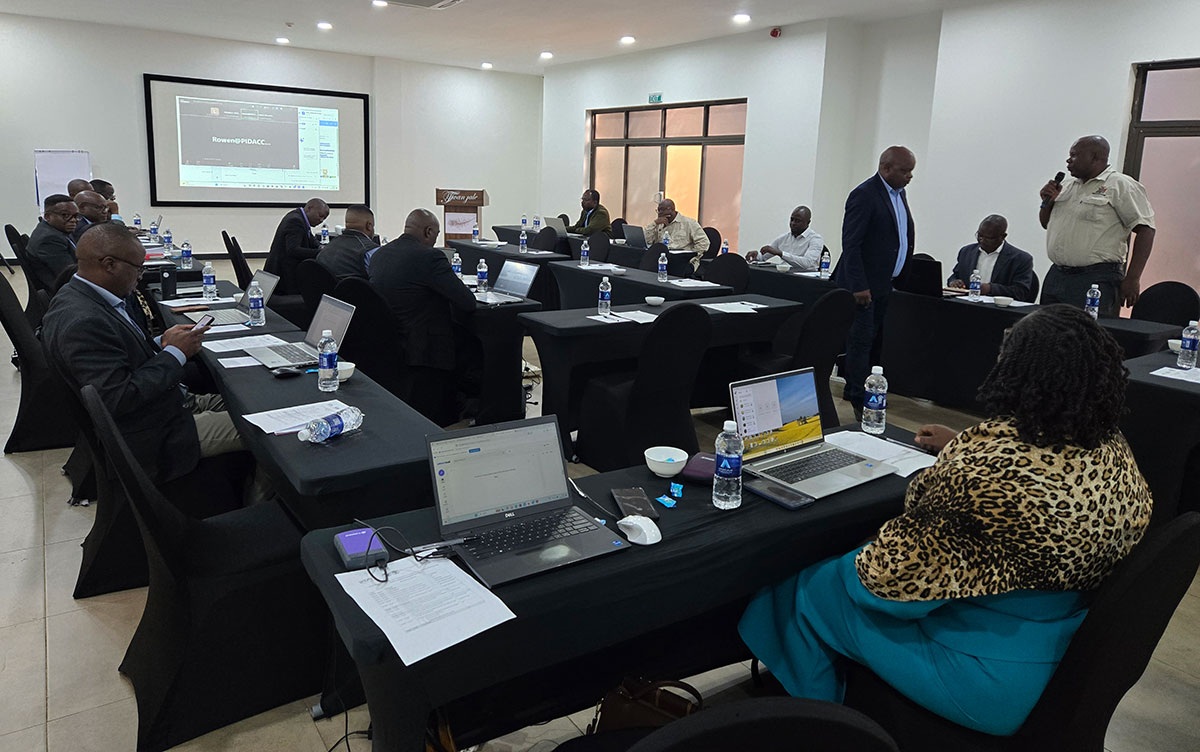
Workshop session in Mozambique.
Building a climate-smart future for the Zambezi Basin
The Zambezi Basin, which spans approximately 1.37 million square kilometers and supports more than 51 million people, remains highly vulnerable to climate variability, droughts, flooding, declining soil fertility, and food insecurity. Through PIDACC Zambezi, ZAMCOM, and IITA are supporting climate adaptation, sustainable agricultural intensification, knowledge generation, and regional cooperation.
The workshops represented a major step toward moving from broad technology identification to country-owned validation and operational planning. Participants reviewed technologies not only for scientific soundness but also for farmer relevance, scalability, affordability, extension-readiness, and suitability for integration into digital advisory systems.
Mozambique prioritizes resilience, water-smart agriculture, and value addition
During the Mozambique workshop, stakeholders reviewed an initial toolkit of about 70 technologies and emphasized the need to prioritize a smaller, operational package for implementation and farmer training.
Mozambique selected 25 technologies covering drought-tolerant maize, climate-resilient cassava systems, soybean inoculants, rice intensification, water harvesting, solar irrigation, fish farming, hermetic grain storage, aflatoxin management, and soil fertility improvement.
Particular attention was given to:
- Drought-tolerant and high-yielding maize varieties;
- Disease-resistant cassava varieties;
- Solar-powered irrigation systems and pumps;
- Integrated rice-fish production systems;
- Organic fertilizers and soil health technologies;
- Aflasafe® for aflatoxin management; and
- Post-harvest storage and value-addition technologies.
Stakeholders also stressed the importance of translating the e-catalog into Portuguese and local languages to improve accessibility for extension officers and farming communities.
Zambia adopts a diversified climate resilience portfolio
The Zambia workshop combined broader PIDACC implementation updates with demonstrations of the TAAT e-catalog and AgWise digital decision-support platform for site-specific nutrient recommendations.

Workshop session in Zambia.
Participants selected 58 technologies spanning crop production, aquaculture, poultry, livestock, soil fertility, mechanization, post-harvest handling, digital advisory systems, and value addition. However, stakeholders agreed that the final toolkit should ultimately be streamlined into a practical package of high-impact technologies.
Key technologies prioritized included:
- Drought-tolerant maize and resilient millet and sorghum varieties;
- Precision fertilizer micro-dosing;
- Soybean inoculants and soil nutrient scanners;
- Maize-legume rotation and intercropping;
- Hermetic grain storage technologies;
- Solar drying and post-harvest handling systems;
- Poultry vaccination and improved livestock systems;
- Aquaculture and fish feed technologies; and
- Mechanization and digital tools such as Hello Tractor and AgWise.
The discussions highlighted the growing demand for integrated resilience solutions that combine productivity, nutrition, income diversification, environmental sustainability, and climate adaptation.
Digital agriculture and decision-support systems at the center
One of the major highlights of the workshops was the demonstration of the AgWise decision-support tool, which combines geospatial soil information, field data, weather data, and machine learning to generate site-specific nutrient recommendations.
The validated technologies will be integrated into ZAMWIS, allowing extension officers, project planners, technical experts, and implementing partners to access climate-smart agricultural solutions through a centralized digital platform.
The workshops also emphasized the need for:
- Training-of-trainers (ToT) programs;
- Simplified extension materials;
- Local language translation;
- Offline and PDF access options for rural areas; and
- Stronger national validation and quality assurance systems.
From technology lists to implementation-ready packages
Across both countries, participants recognized that successful climate adaptation requires more than isolated technologies. The workshops, therefore, recommended packaging technologies into integrated thematic bundles, including:
- Climate-resilient cereals and legumes;
- Soil fertility and nutrient-use efficiency;
- Water-smart production systems;
- Seed and planting-material systems;
- Post-harvest and food safety technologies;
- Livelihood diversification; and
- Mechanization and digital advisory services.
This integrated approach is expected to improve adoption, strengthen extension delivery, and enhance long-term resilience among farming communities in the Zambezi Basin.
A major milestone for regional agricultural transformation
The Mozambique and Zambia validation workshops mark an important milestone in strengthening evidence-based agricultural transformation across Southern Africa. By combining validated technologies, digital decision-support systems, field demonstrations, and country-led prioritization, the initiative provides a strong foundation for scaling climate-smart agriculture in the region.
IITA remains committed to supporting governments, ZAMCOM, national research systems, and development partners to ensure that validated technologies reach farming communities and contribute to improved productivity, resilience, food security, and sustainable livelihoods.
As implementation progresses, the validated site-specific agronomic recommendations, TAAT technologies e-catalog packages, and ZAMWIS integration are expected to become valuable tools for extension systems, policy planning, and climate adaptation efforts across the Zambezi Basin.
Contributed by John Okoth Omondi and Siyabusa Mkuhlani

No Comments