
In late May, the African Development Bank Group will convene its Annual Meetings in Brazzaville, Republic of Congo, under the theme, “Mobilizing Africa’s Development Financing at Scale in a Fragmented World.” That theme is timely as Africa needs financing at scale. It also needs resilient and sustainable agrifood systems, which the AfDB can help make happen.
At the 2025 Nutrition for Growth Summit in Paris, when the global community made US$27.55 billion in financial commitments for nutrition, the AfDB stood out. In the Global Nutrition Report’s Nutrition Accountability Framework, a multi-stakeholder initiative comprised of global institutions established in 2014, the Bank committed to increase nutrition-smart investments across multiple sectors by at least 20% annually. It has a goal of reaching a cumulative total of US$9.5 billion by 2030.
As an African nutrition scientist who has seen nutrition challenges, policy efforts, and implementation gaps in over 30 African countries across the past decade, I believe that commitment matters. But the real test is not whether money is pledged. The real test is whether that financing is aligned with the nutrition outcomes African countries have already committed to deliver – and whether they are then implemented.
Better diets are not an automatic outcome of food systems investment. Roads do not automatically improve child nutrition. Irrigation does not automatically improve diet quality. Climate-smart agriculture does not automatically reduce anaemia, stunting, wasting, or food poverty. Production is necessary, but it is not sufficient.
This is where the Global Nutrition Report, launching 28 May in a Rome Nutrition Week thematic session, can become more than a data source. It can become an investment compass. Its Nutrition Accountability Framework is the official tracker for Nutrition for Growth commitments. It shows which government committed to what, where, by when, and with what level of specificity.
For AfDB, this is a strategic opportunity. No institution is better placed to connect nutrition commitments to bankable investments across Africa. AfDB finances the systems that shape what people grow, process, sell, buy, cook, and eat. If it chooses to align those investments deliberately, it can help nourish Africa while advancing development.
Three country examples show what this could look like.
Lesotho has registered commitments that speak directly to investment alignment. Through its Food and Nutrition Coordinating Office, the government committed to integrate nutrition into at least 80% of national food systems, climate change, and livelihood programmes by 2030 to contribute towards improvement of nutrition indicators by 25%. For AfDB, Lesotho is not only a nutrition case. It is a governance case. Every climate, food systems, livelihoods, and public finance operation can ask one simple question: Does this investment have explicit nutrition objectives, budget allocations, and monitoring indicators? If not, it is not yet aligned.
Mauritania offers another lesson. The government has committed to reduce stunting among children under five from 25.8% in 2025 to less than 20% by 2030. It has also committed to strengthening nutrition systems through better micronutrient coverage, nutrition research, monitoring, infant and young child feeding, and coordination. Here, the investment question is different. How can development finance move nutrition from programme dependency to institutional permanence?
Nigeria shows why scale, data, and affordability must sit at the centre of nutrition financing. Nigeria has committed to establish a National Nutrition Data Alliance, strengthen nutrition information systems, and integrate them into a National Nutrition Dashboard by 2028. It has also committed to reduce food poverty among vulnerable populations by 25% by 2028 and to increase sustainable federal appropriation for priority multisectoral nutrition interventions over the 2025 to 2028 period.
Nigeria should matter deeply to AfDB because scale without nutrition discipline can dilute impact. If investments only track hectares, yields, roads, processing capacity, or number of farmers reached, they will miss the harder question: Did the investment improve access to safe, affordable, diverse, nutrient-rich diets?
AfDB already understands the value of structured screening. Its own gender mainstreaming checklist for the health sector, for example, was designed to help staff and consultants identify gender issues, design responsive strategies, allocate resources, and define monitoring indicators through the project cycle. Nutrition needs the same discipline.
AfDB should create a Nutrition Investment Alignment Framework for Africa.
With the alignment framework, at a minimum, every major agriculture, climate, infrastructure, health, Water, Sanitation, and Hygiene (WASH), and social protection investment should answer five questions.
- Does the investment respond to a documented nutrition problem?
- Does it improve availability, affordability, desirability, safety, or consumption of nutritious foods?
- Does it include nutrition objectives, results or impact pathways, budget lines, and indicators?
- Does it align with country Nutrition for Growth commitments?
- Does it track diet and nutrition outcomes, not only production or delivery outputs?
This would also help align AfDB investments with the 2025 Kampala CAADP Declaration on building resilient and sustainable agrifood systems in Africa.
The Brazzaville convening offers a timely platform for this shift. If the 2026 Annual Meetings are about mobilizing Africa’s development financing at scale, then nutrition accountability should be part of the conversation. Africa does not need more nutrition language. It needs nutrition discipline in the way investments are selected, designed, financed, monitored, and reported.
What gets financed gets built. What gets measured gets managed. The African Development Bank has already made a powerful financial commitment. The next step is to make every relevant investment nutrition-smart by design, country-led by structure, and accountable by measurement. That is how AfDB can move from financing development to nourishing development.
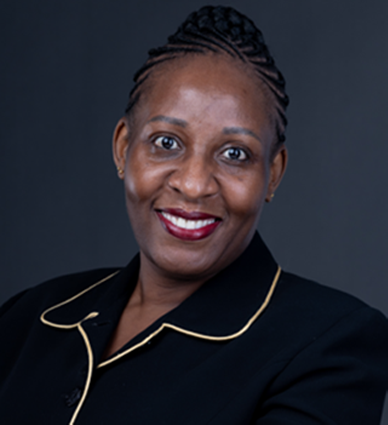
Mercy Lung’aho leads the Food Security, Nutrition and Health Program at the International Institute of Tropical Agriculture (iita.org). She received her Ph.D. in Food Science and International Nutrition from Cornell University. She is a member of the American Society for Nutrition, the African Nutrition Society and a registered nutritionist at the Kenya Nutrition and Dietetics Institute, among others.


No Comments