
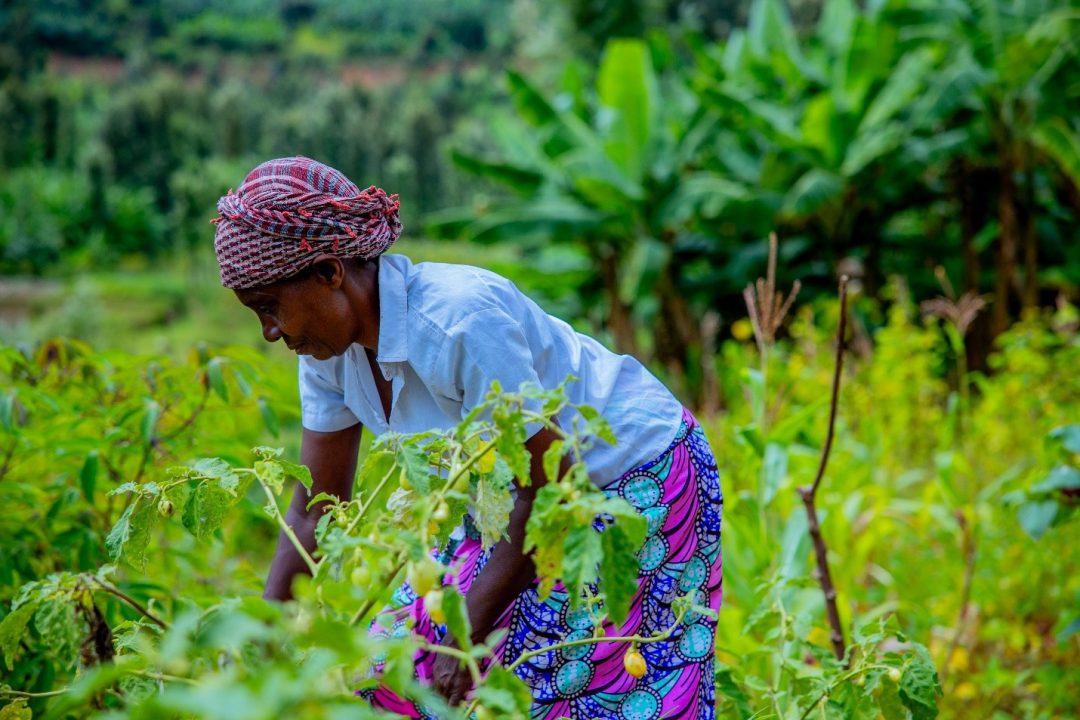
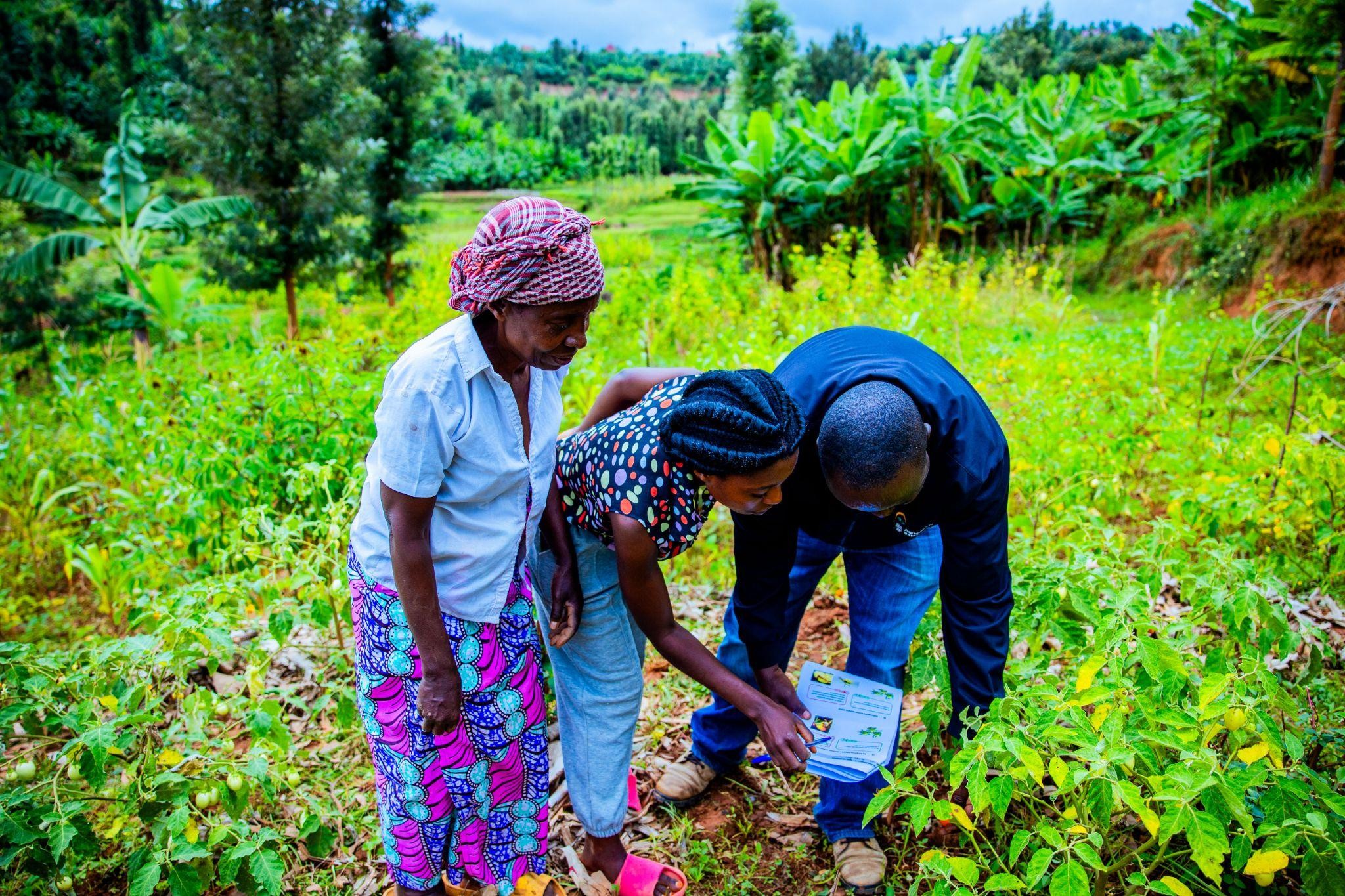
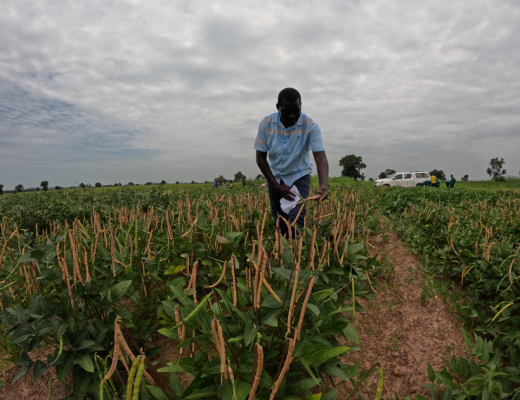
Tricot farmers, supported by One Acre Fund field technician, recording performance data of African Eggplant varieties under Tricot trials in Rutsiro District.
For many years, selecting the right seed varieties for farmers in Rwanda was a slow and highly technical process. Before a seed recommendation could reach farmers, it often took up to two years of station-based trials and on-farm evaluations. During this process, farmers had very little involvement beyond providing land for testing, while researchers and technicians made most of the decisions, primarily based on technical measurements such as yield performance.
This traditional approach created several challenges for One Acre Fund Rwanda, an organization that works closely with thousands of farmers across Rwanda through seed distribution and agricultural support services. Every season, One Acre Fund distributes large quantities of improved seeds, including maize, cassava, sorghum, vegetables, and green manure cover crops. Ensuring that farmers receive the right varieties adapted to their local conditions is essential for improving productivity and household incomes.
According to Elyse Tuyishime from One Acre Fund’s Agricultural Innovations Department, they previously used the Randomized Complete Block Design (RCBD) approach for seed evaluation, which was slow and offered limited farmer participation.
“Our seed production process used to start at the station level. We tested six varieties, but most of the work was done at the station, and the technicians selected the best varieties for farmers based on their own measurements. That process took more than two seasons at the station, and then the same number of seasons on-farm, which meant it could take up to two years in total before we get a recommendation.”
He further explained that farmers had little ownership in the process because technicians and researchers primarily influenced decisions.
“Farmers’ participation basically meant giving us their land. Our technicians did everything else. The process was too scientific and technical, making it hard for farmers to feel ownership over the research or its outcomes.”
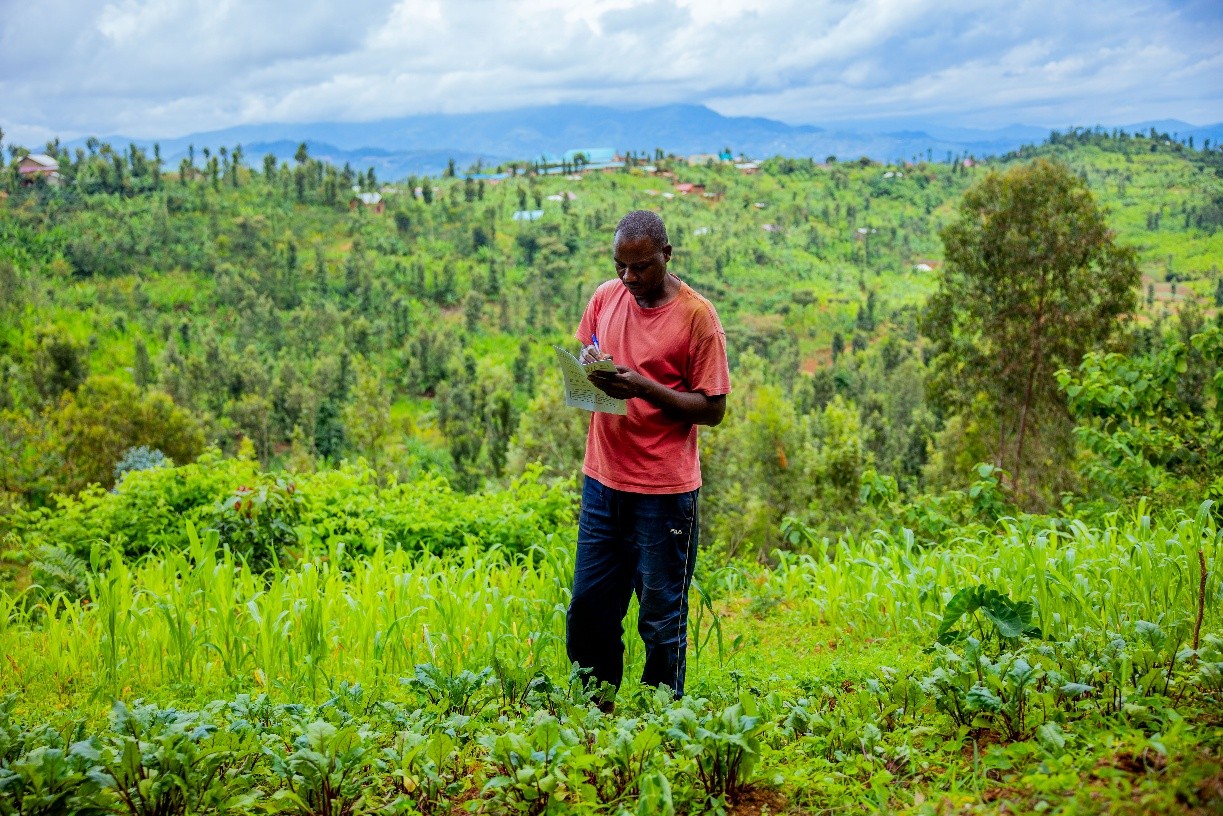
A farmer monitoring his sorghum and beetroot Tricot trials, observing performance differences among the three varieties, and recording the progress of each plot in Rutsiro District.
This changed in 2020 when One Acre Fund adopted the Triadic Comparison of Technologies (Tricot) approach, introduced in Rwanda by IITA–CGIAR under the 1000Farms project. The approach was adopted through close collaboration between One Acre Fund, Rwanda Agriculture and Animal Resources Development Board (RAB), and IITA.
The Tricot approach places farmers at the center of agricultural research by allowing them to test and compare different seed varieties directly on their own farms. The approach consists of providing farmers with three different crop varieties to grow and evaluate under their normal farming conditions, after which they compare the varieties based on traits such as yield, taste, disease tolerance, maturity period, and market preference. Instead of relying solely on research stations, farmers actively participate as co-researchers, observing crop performance in real-world conditions, and sharing feedback informed by their own experiences and priorities.
One Acre Fund field technician highlights that Tricot has revealed priorities that were often overlooked in traditional research systems. Beyond yield, farmers are selecting varieties based on taste, grain size, marketability, disease resistance, and adaptation to local environments.
“Since the adoption of the Tricot approach, One Acre Fund has significantly improved the efficiency and inclusiveness of its seed selection process. The time required to evaluate and recommend varieties has been reduced by half. The number of varieties tested simultaneously has increased considerably,” noted Tuyishime Elyse, in charge of cropping systems and research at One Acre Fund Rwanda.
Currently, station-based research is mainly reserved for technical measurements, while farmers themselves drive the on-farm evaluation process. Farmers receive seeds directly, test them on their land, and provide observations that help researchers identify the most suitable varieties for different regions.
One Acre Fund is currently using the Tricot approach to test crops such as cassava, maize, sorghum, eggplant, cabbage, and beets across 18 districts of Rwanda. The approach helps farmers identify which varieties perform best in their local soil and climate conditions.
Mwizerwa Charles, Senior Research Associate at IITA, speaking from his experience working closely with farmers through the Tricot approach, drew on the technology’s broader success across different countries to explain its growing impact in Rwanda. He pointed to Nigeria, where Tricot had already been implemented well before its introduction in Rwanda, as a testament to the transformative power of this participatory research model when farmers are placed at the center of the seed selection process.
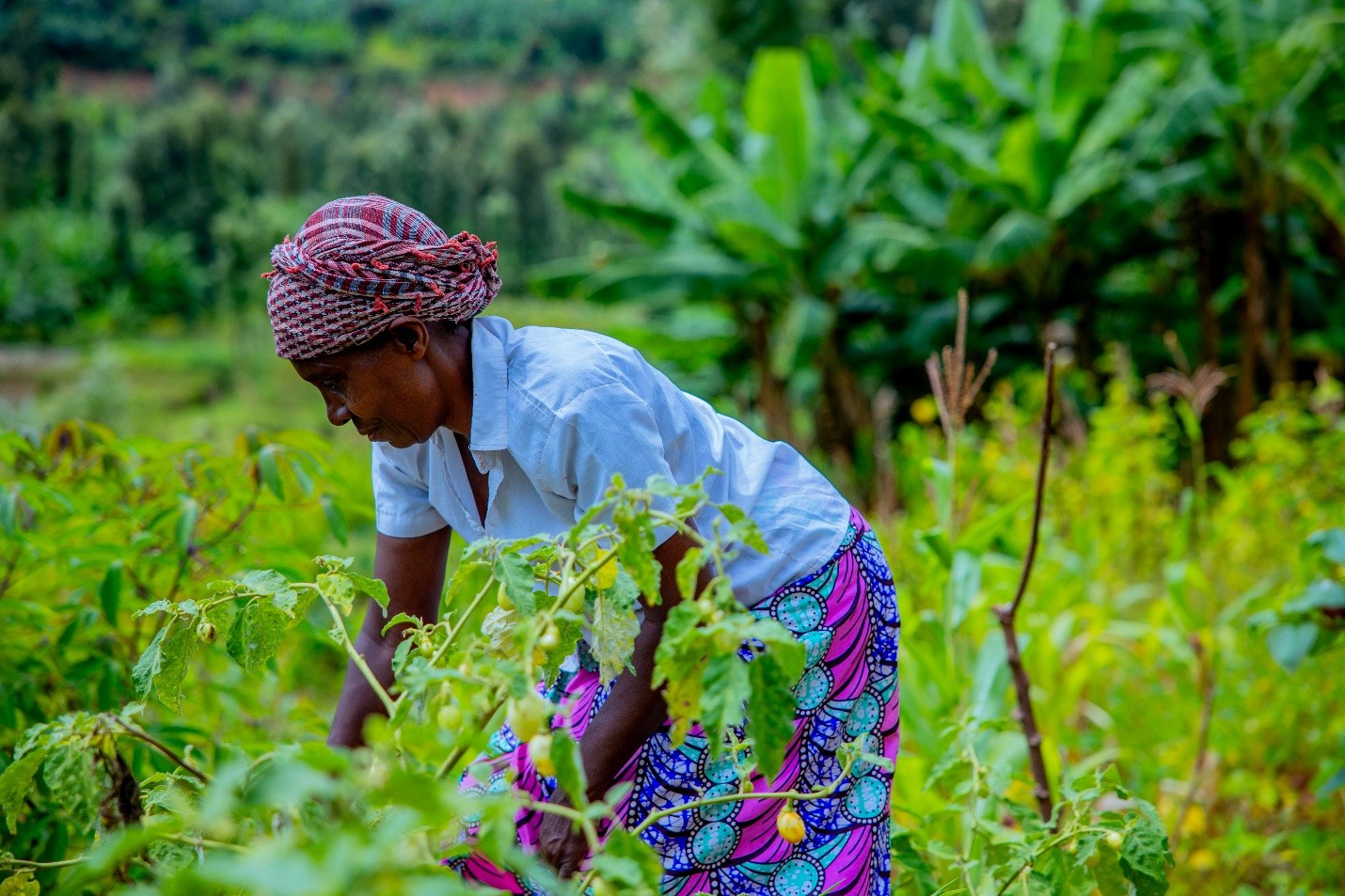
Donatile Uzamukunda in her plot, testing three varieties of vegetable seeds, mainly eggplant and cabbage.
“The close collaboration between scientists and farmers is what makes Tricot stand out. They (farmers) now receive seeds directly from breeders and are empowered to test those seeds themselves, giving them the ability to identify which variety performs best among the ones they have tried,” adds Charles Mwizerwa, Tricot expert in Rwanda.
He further noted that One Acre Fund is a business-oriented organization with a core focus on supplying seeds to farmers. Hence, the organization recognizes the value of collaborating with IITA on Tricot to simplify seed selection. Through this partnership, farmers can access seeds before they are officially released to the market, giving them the unique opportunity to evaluate different seed varieties and choose the one that best meets their needs, long before anyone else.
For farmers, the change has been empowering. Donatile Uzamukunda, from Rutsiro district, one of the farmers involved in the Tricot approach since its introduction in Rwanda, says the approach has given farmers a stronger voice in agricultural research and seed selection.
“In the past, researchers would bring whatever variety they thought was best without ever asking what we, as farmers, needed or preferred. With Tricot, I have been able to compare varieties myself and have a real say in which ones are most suitable for our region and our community.” Donatile Uzamukunda was testing three vegetable seed varieties (African eggplant and cabbage) in her small plot.
The impact of Tricot goes beyond improving seed selection. It is strengthening collaboration between researchers and farmers while ensuring that agricultural innovations are more practical, inclusive, and adapted to farmers’ real needs. By simplifying the research process and making it more participatory, the approach is contributing to faster delivery of quality seeds and improved agricultural productivity.
Contributed by Ritha Bumwe, Mugisha Henri Confiance, and Charles Mwizerwa

No Comments