
For decades, Bambara groundnut has been quietly feeding families across Nigeria.
In rural communities stretching from the savannahs of the north to the forest zones of the south, farmers (many of whom are women) have relied on this hardy indigenous legume as a dependable source of food and income. It survives where other crops struggle, producing nutritious grain even under drought conditions and in poor soils. Rich in protein, carbohydrates, and healthy fats, Bambara groundnut offers a rare nutritional package in a single crop.
Yet despite its resilience and nutritional value, Bambara groundnut has remained largely absent from the spotlight. While major crops such as maize, cowpea, and soybean have benefited from decades of research and investment, Bambara groundnut has often been overlooked.
That story may soon be changing.
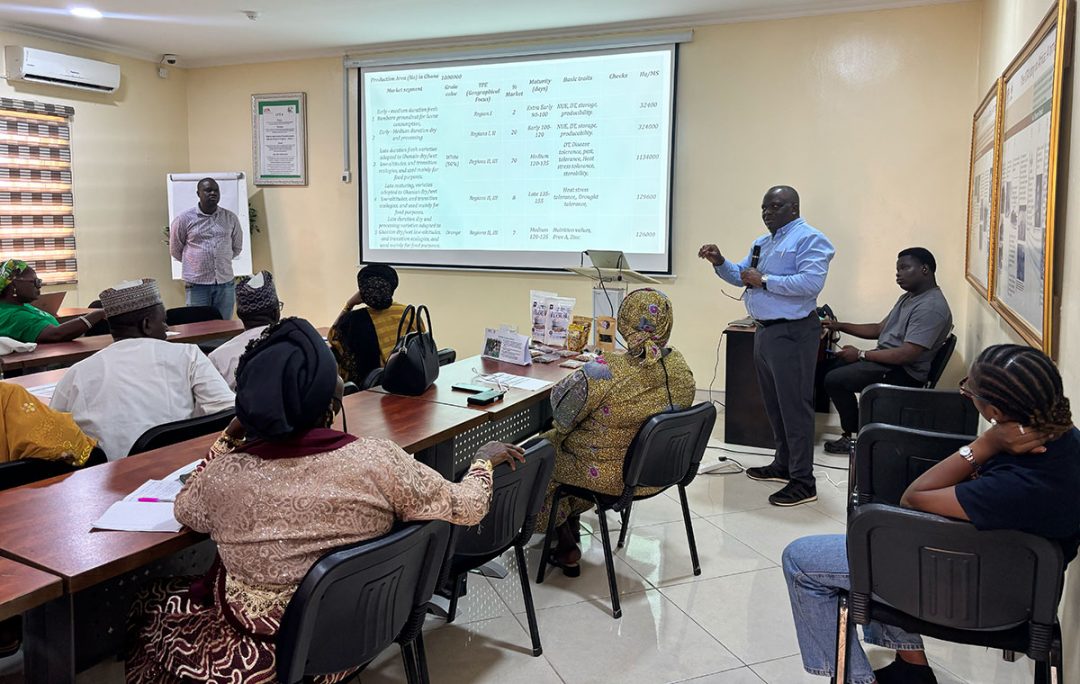
On 7 May, a diverse group of stakeholders gathered at IITA–CGIAR Abuja station in Kubwa, Abuja, to answer a simple but transformative question:
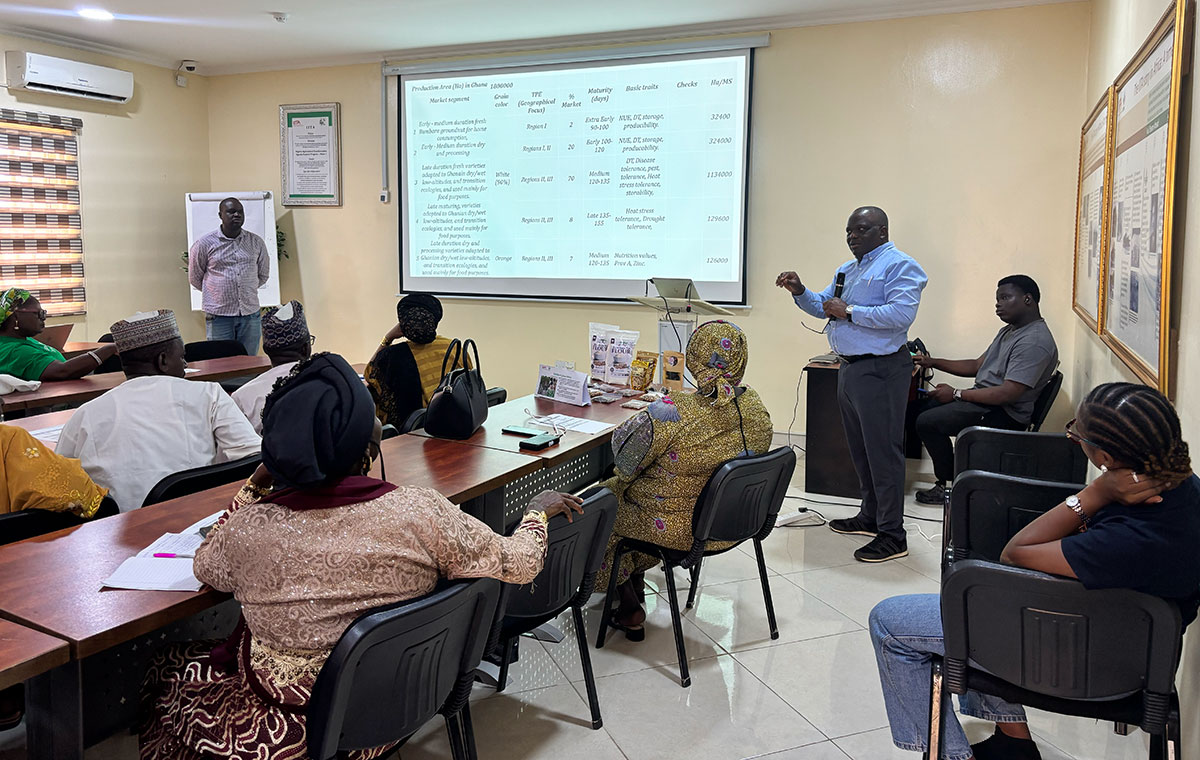
Dr Olaniyi Oyatomi, IITA Plant Geneticist speaking during the PDT meeting in Abuja.
What should the Bambara groundnut of the future look like?
The meeting brought together breeders, farmers, processors, nutritionists, plant pathologists, seed companies, regulators, and genetic resource specialists under the Nigeria Bambara Groundnut Product Design Team (PDT). Their mission was ambitious, not merely to discuss the crop’s future, but to collectively design it.
A different way of designing crop varieties
Too often, agricultural innovations are developed based on assumptions about what farmers and consumers need. The Product Design Team approach turns that process on its head by placing farmers, markets, and end users at the center of decision-making.
Opening the meeting, Dr Anthony Okere, the Director of the National Centre for Genetic Resources and Biotechnology (NACGRAB), emphasized the importance of collaboration in unlocking the potential of neglected and underutilized crops.
Farmers were represented by Dr Alex Eze, Secretary General of the Bambara Growers Association, ensuring that the voices of those who cultivate the crop were part of every discussion.
Participants were introduced to the Product Design Team framework and the concept of Target Product Profiles (TPPs) by Dean Muungani. A TPP serves as a blueprint for crop improvement, translating the needs of farmers, traders, processors, and consumers into measurable breeding targets.
Rather than breeders deciding in isolation which traits are important, the process creates a shared vision of success across the entire value chain.
Defining what consumers want from Bambara groundnut
Throughout the day, participants engaged in lively discussions and technical working sessions to identify market opportunities and agree on the characteristics future Bambara groundnut varieties should possess.
The conversations explored every aspect of the crop, from productivity and resilience to cooking quality, nutrition, and consumer preferences.
Stakeholders debated which traits were essential, which were desirable, and what performance levels would realistically meet market expectations. While these discussions may seem highly technical, they ultimately determine whether future varieties will succeed in farmers’ fields and in local markets.
By the end of the meeting, participants had reviewed, refined, and formally endorsed Nigeria’s first stakeholder-driven target product profile for Bambara groundnut.
Building a better Bambara groundnut
The agreed priority product was an early-maturing, light-colored Bambara groundnut variety targeted at the fresh grain market.
This market segment covers approximately 40,000 hectares across Nigeria’s transitional, Guinea Savannah, Sudan Savannah, and forest agroecological zones, where Bambara groundnut is primarily grown under rainfed, low-input conditions.
The vision that emerged was both ambitious and practical.
Farmers identified higher yields as a top priority. The target is to develop varieties capable of producing up to 3.5 tons per hectare, more than three times the yields commonly achieved today.
Early maturity was equally important. Participants agreed that varieties that mature in about 90 days would help farmers cope with increasingly unpredictable rainfall patterns and a changing climate.
Market demand also shaped the discussions. Traders and consumers consistently prefer large, light cream-colored seeds, which command premium prices in fresh grain markets. Future varieties will therefore need to meet these visual and quality expectations.
Convenience emerged as another key consideration. Stakeholders called for varieties that cook in less than 30 minutes, reducing both cooking time and household fuel costs. They also emphasized the need to lower levels of oligosaccharides, the compounds often associated with flatulence that can discourage consumption.
Nutrition featured prominently throughout the discussions. Participants highlighted the importance of increasing protein and essential micronutrient content, such as iron, zinc, and calcium, thereby strengthening Bambara groundnut’s contribution to healthier diets and improved food security.
At the same time, farmers stressed the need for stronger resistance to major production constraints, including Fusarium wilt, Cercospora leaf spot, aphids, nematodes, and storage weevils.
Several additional traits were identified as future breeding opportunities, including improved flour quality, reduced beany flavor, enhanced swelling capacity, and adaptation to waterlogged environments such as those found in parts of Bayelsa State.
Taken together, the profile outlines a next-generation Bambara groundnut that yields more, matures faster, cooks quicker, offers better nutrition, and delivers the qualities consumers and markets value most.
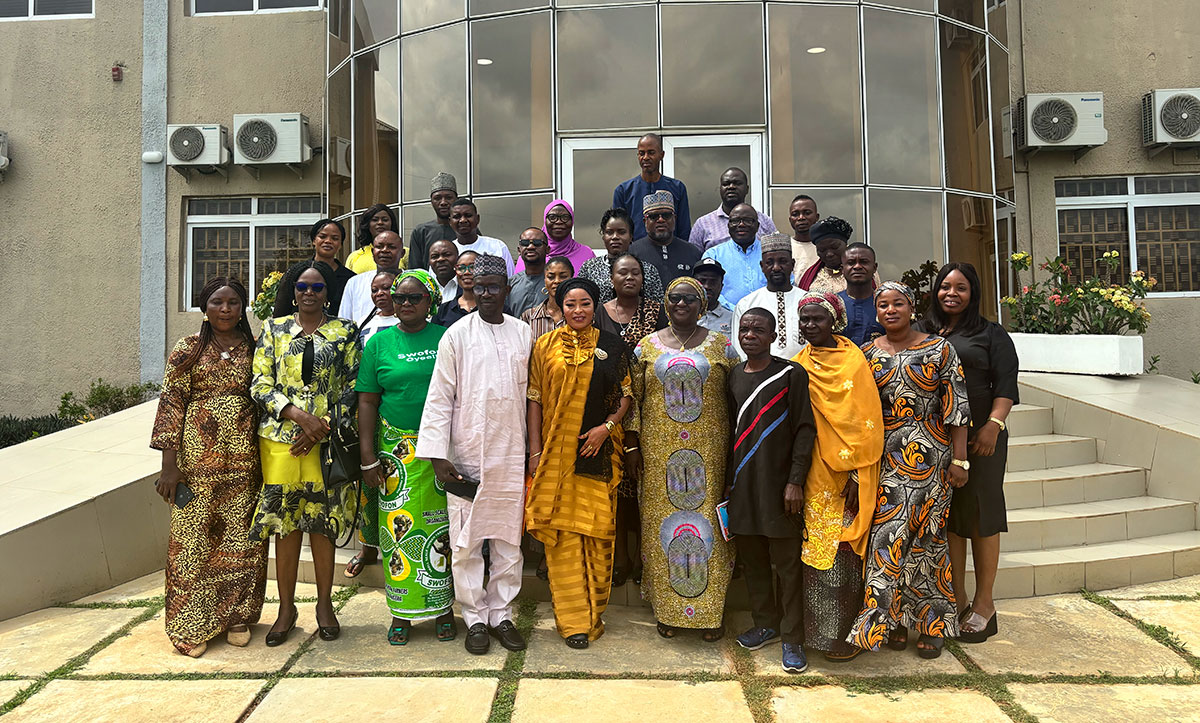
Participants after the meeting at IITA Kubwa Station, Abuja.
More than a technical exercise
Perhaps the most important outcome of the meeting was not the document itself, but the process behind it.
For one day, farmers, researchers, processors, seed companies, regulators, and genetic resource experts sat around the same table to make decisions together. Each group brought a different perspective, yet all shared a common goal: ensuring that future Bambara groundnut varieties respond to real-world needs.
The result is a roadmap that any single institution does not own, but the entire value chain.
For breeders, the profile provides clear guidance on which traits to prioritize, which parent lines to select, and how to measure progress. For farmers and consumers, it offers confidence that future varieties are being developed with their needs firmly in mind.
Unlocking the potential of an overlooked crop
As climate variability increases and the demand for nutritious, resilient food systems continues to grow, Bambara groundnut is gaining renewed attention.
Its ability to thrive under challenging conditions, combined with its nutritional richness and cultural importance, positions it as a crop with enormous untapped potential.
The Product Design Team meeting in Abuja marked an important milestone on that journey. By aligning scientific research with market demand and stakeholder priorities, Nigeria has taken a significant step toward transforming Bambara groundnut from an underappreciated crop into a stronger contributor to food security, nutrition, and rural livelihoods.
For generations, Bambara groundnut has quietly served communities across the country.
Now, with a shared vision for its future, it may finally receive the attention it deserves.
Contributed by ’Timilehin Osunde

No Comments